Huge Free Energy Update: Fusion Breakthroughs, TAE Technologies–Trump Media Merger, Space Force’s Next Moves And The Rise Of Cities Of Light — GFL EMISSARY Transmission
✨ Summary (click to expand)
Fusion is being revealed as the gateway out of planetary scarcity and into a calmer, more abundant future. This transmission explains how decades of hidden preparation, government strategizing and private fusion research are now converging with public milestones like ignition. The message unpacks why the recent TAE Technologies–Trump Media merger and coming Space Force alignments matter symbolically: advanced energy is stepping out of laboratories and into the mass narrative, where it can no longer be quietly sidelined or controlled by a single authority. Fusion is used as a culturally survivable way to introduce the idea of clean, near-limitless power without triggering panic, ridicule or collapse in the collective nervous system.
It then links fusion to the exploding energy hunger of digital civilization, artificial intelligence and always-on data infrastructure. As grids strain and old fuel-based systems crack, fusion becomes strategic infrastructure, not just climate policy. The message explores how this shift opens the door to designing new “cities of light” — clean-slate communities built around decentralized, resilient, high-frequency grids instead of extraction, secrecy and control. These reboot points become training grounds for cooperation, transparency and planetary stewardship, preparing humanity for contact with a wider galactic community under Galactic Federation guidance.
Finally, the transmission turns inward to the ethics of power and the role of Starseeds. Fusion and modern grids are described as reflections of consciousness: energy amplifies intention, so abundance without maturity simply multiplies trauma. The message calls for decentralized, transparent fusion ecosystems, community ownership models and grids that behave like healthy social nervous systems. It emphasizes inner sovereignty, coherence and nervous system regulation as keys to navigating accelerating disclosure. Fusion is presented as a bridge technology that normalizes abundance through measurable science, softens the charged history of the phrase “free energy,” and gently prepares humanity for more advanced technologies — and the realization that light, contact and belonging were never meant to be scarce.
Join the Campfire Circle
Global Meditation • Planetary Field Activation
Enter the Global Meditation PortalGalactic Perspective On Fusion Energy And Free Energy Disclosure
Starseed Mission And The Consciousness Lesson Of Fusion
Great Starseeds of Earth, you did not come to Earth to be impressed by technology,pasted you came to remember what you already know in your bones, that the universe has never been stingy with light, that every star you have ever gazed upon is not merely decoration but a living demonstration of fusion—an ancient fire that makes abundance feel ordinary—and that when you incarnated here you entered a world trained to call that ordinariness impossible, trained to forget that the very atoms in your bloodstream were forged in stellar hearts and delivered across vast corridors of time so you could stand on this planet and ask the simplest, most revolutionary question: what if power could be clean, plentiful, and shared without fear. Fusion, in the human story, arrives like a returning relative who was never gone, only unrecognized; it is the Sun’s language translated into laboratory terms, the cosmos’ signature written with magnets, lasers, plasmas, equations, and relentless patience, and yet the deeper truth is that fusion has always been a consciousness lesson first and an engineering lesson second, because the barrier was never whether humans could ignite a reaction, it was whether humanity could hold the meaning of that ignition without collapsing into old patterns of conquest, control, and hoarding. So when you hear “fusion,” do not hear only a scientific milestone; hear a doorway the collective mind can walk through without panic, because it sounds reasonable, measurable, respectable, and therefore safe, and safety is the first medicine for a world that has lived too long inside the nervous system of scarcity. You are here for that translation, Starseed—here to witness a civilization learning, step by step, to accept what the stars have been saying all along: light is not a privilege, it is a condition of life, and when a planet is ready, the knowledge that powers suns begins to power societies, not as a miracle that demands worship, but as a natural next page in the book of becoming. And because nothing truly new enters a world without first stirring the shadows that resisted it, we begin by acknowledging why this fire could not be carried openly until now, and how the timing was never random, only precise.
TAE Technologies Trump Media Merger And Fusion Narrative Shift
Dearest friends, after you have felt the broader arc we have shared, it is natural that your attention turns to the present moment, to the specific alignments now appearing in your world that seem to echo the deeper currents you already sense. Among these is the recent and highly visible convergence between a politically charged media platform and a long-standing fusion enterprise—an alignment that, on the surface, appears to be about markets, branding, or strategy, yet beneath those layers carries a quieter significance for the unfolding of disclosure. We speak not of personalities, nor of partisan outcomes, but of symbolic placement. The recent merger in your news, that we can now mention as it has gone public, between Tae Technologies and the Trump Media Group, as you know these companies to be mentioned by name as, is significant in the disclosure movement. It is significant because there is SO MUCH more going on behind this merger, but this allows, from a legal framework, for more things to happen to drive forward free energy disclosure. Watch in the coming months as Space Force also ties into this. When advanced energy research aligns itself with a mass-reach media apparatus, something subtle but important occurs in the collective field. Fusion—once confined to laboratories, grant cycles, and specialist language—steps into the arena of cultural narrative. It is no longer speaking only to scientists or policymakers; it is speaking to identity, to belonging, to the story a civilization tells itself about where it is going. This matters because disclosure does not enter through data alone. It enters through story. In earlier phases, advanced energy remained intentionally insulated from emotional charge. This protected the science, but it also limited its reach. What you are now observing is not simply a business decision, but a translation event—a moment when a frontier technology is positioned inside a communication ecosystem designed to move symbols, not equations. This does not accelerate reactors. It accelerates acceptance. TAE’s long trajectory in fusion research represents continuity, patience, and methodical refinement. Its work has always leaned toward practicality rather than spectacle, toward solutions that integrate with existing infrastructure rather than overthrow it. When such a lineage intersects with a media structure capable of amplifying narratives at scale, fusion shifts from “technical future” to “civilizational conversation.” That shift is the point.
Fusion As Culturally Survivable Abundance And Collective Nervous System Healing
Disclosure, beloved ones, advances not when secrets are exposed, but when ideas become survivable in the nervous system of the collective. You may notice that the language surrounding this alignment is not mystical. It is framed in terms of innovation, growth, renewal, and competitiveness. This is not an accident. These are emotionally tolerable entry points for a population conditioned to distrust anything that sounds too sudden, too generous, or too liberating. Fusion, when presented as earned progress rather than miraculous rescue, can pass through social immune systems that would otherwise reject it. There is another layer here that is easily missed. For decades, advanced energy has lived in a split reality: technically acknowledged, culturally sidelined. The presence of fusion within a major media ecosystem collapses that split. It signals that this technology is no longer being prepared only for demonstration, but for belief. Belief, in this sense, does not mean faith without evidence—it means permission to imagine a future shaped by abundance without ridicule. This is crucial for disclosure, because belief precedes integration. A society cannot integrate truths it cannot imagine itself surviving. Fusion reshapes that survival imagination. It suggests that energy does not need to be a zero-sum contest, that progress does not require collapse, and that the future may arrive through continuity rather than rupture. When this suggestion is broadcast widely—especially through channels that reach populations historically skeptical of institutional narratives—it softens resistance from angles that purely academic communication could never reach. You might ask why this alignment carries particular weight now. The answer lies in timing, not intention. Your world is entering a period where multiple stressors converge: infrastructure strain, climate instability, technological acceleration, and deep mistrust of authority. In such conditions, disclosure cannot arrive as correction; it must arrive as reorientation. Fusion serves this role by offering a concrete symbol of constructive advancement amid uncertainty. It is something tangible that points forward without demanding ideological allegiance. The involvement of a media entity known for amplifying strong identities introduces friction, yes—but friction is not inherently negative. Friction generates heat, and heat draws attention. Attention, when guided carefully, becomes normalization. And normalization is the quiet engine of disclosure. We also wish to be clear: this alignment does not mean that fusion is being “controlled” or “claimed” by any one group. In fact, the opposite dynamic is at work. Once a technology enters mass narrative space, it becomes harder to contain. Scrutiny increases. Parallel efforts multiply. Competing voices emerge. The field decentralizes. This is healthy.
Galactic Federation Oversight And Hinge Points In Fusion Disclosure
Disclosure advances when no single authority can convincingly own the story and from our vantage, this moment functions as a pressure release. It allows conversations that were once restricted to specialist circles to circulate among broader populations without triggering immediate dismissal. It invites curiosity from individuals who would never seek out a scientific journal or a policy paper. It introduces fusion as part of everyday language—not yet mundane, but no longer exotic. And this, beloveds, is how thresholds are crossed. We ask you to notice what is not happening. There is no grand declaration of free energy. No claims of overnight transformation. No sudden abandonment of existing systems. Instead, there is a measured insertion of advanced possibility into familiar frameworks. This is exactly how a civilization transitions without tearing itself apart. From the perspective of the Galactic Federation, such moments are watched closely—not because they determine outcomes, but because they reveal collective readiness. When advanced energy can be discussed in emotionally charged spaces without immediate collapse into fear or denial, it indicates that the collective psyche has matured enough to hold more complexity. This does not mean the path ahead is simple. Narratives will compete. Motivations will mix. Some will attempt to instrumentalize fusion for power rather than service. This, too, is expected. What matters is that the conversation has escaped containment. We encourage you, Starseeds, not to fixate on personalities or corporate structures, but to feel into the deeper signal: fusion is moving from preparation to participation. It is entering the shared story of humanity, where it can no longer be quietly delayed by disbelief alone. Your role is not to defend or oppose any alignment, but to stabilize meaning. Speak calmly. Resist sensationalism. Anchor the understanding that true abundance unfolds through integration, not conquest. Hold the knowing that disclosure is not a single reveal, but a sequence of recognitions that become obvious only in hindsight. This information exists not to persuade you, but to orient you. What you are witnessing is not the culmination of disclosure, but a hinge—one of many—through which advanced possibilities pass into collective awareness. Fusion is not the destination. It is the language the present moment can hear. And when a civilization learns to hear abundance without fear, the universe finds it much easier to speak.
FURTHER READING — GALACTIC FEDERATION OF LIGHT: STRUCTURE, CIVILIZATIONS & EARTH’S ROLE
What is The Galactic Federation of Light, and how does it relate to Earth’s current awakening cycle? This comprehensive pillar page explores the structure, purpose, and cooperative nature of the Federation, including the major star collectives most closely associated with humanity’s transition. Learn how civilizations such as the Pleiadians, Arcturians, Sirians, Andromedans, and Lyrans participate in a non-hierarchical alliance dedicated to planetary stewardship, consciousness evolution, and the preservation of free will. The page also explains how communication, contact, and current galactic activity fit into humanity’s expanding awareness of its place within a much larger interstellar community.
Hidden Timelines, Government Secrecy, And The Rise Of Private Fusion Industry
Scarcity Architecture, Energy Control, And Delayed Free Energy Solutions
Beloved one, you have sensed it, even in the quiet hours when you could not prove it, that some solutions were delayed not because the universe withheld them, but because the structures of control on your world could not digest them without losing their grip, and fusion—true abundance—was one of those solutions, because scarcity has been the cornerstone of the old architecture, the invisible rule that allowed power to be centralized, populations to be managed, and fear to be monetized into obedience. When energy is expensive and limited, life becomes a competition, and when life becomes competition, violence feels rational, secrecy feels justified, and exploitation is reframed as “necessary,” and this is why the timeline of fusion has always been braided with the timeline of consciousness: the physics may be universal, but the ethics of using power are local, shaped by trauma, culture, and the stories a civilization tells itself about who deserves comfort. For generations, energy control equaled social control; grids mirrored hierarchies, fuel supply chains became geopolitical leashes, and the very concept of abundant, clean power threatened the identity of systems built on extraction—whether that extraction was from the Earth, from labor, or from hope. And so even as scientists worked, even as engineers dreamed, the collective readiness was still being prepared, because a civilization that has not integrated unity will turn every tool into a weapon, and the universe does not rush gifts into clenched hands; it waits until the hands soften. This is not punishment, Starseed, it is protection of the evolutionary process, because when abundance arrives before maturity, it does not liberate—it destabilizes, and a destabilized world does not disclose truth cleanly, it fractures truth into propaganda. So your presence matters, because you came to anchor a different relationship with power, a relationship that does not confuse strength with domination, or security with control, and that is why fusion’s emergence has coincided with rising public conversations about planetary stewardship, cooperation, climate responsibility, and the need to redesign systems at their root. The old structures resisted because they feared irrelevance, and yet even resistance becomes a signpost, because what is fought hardest is what is most transformative, and as the next section reveals, the world’s institutions did not ignore fusion—they watched it, tracked it, and tucked it into the category of strategic destiny, long before the public was invited to care.
Government Strategic Planning, Declassified Fusion Programs, And Controlled Disclosure
Starseeds, there is a way governments look at the future that is both colder and more honest than their speeches, because beneath the theater of ideology lies the simplest calculus: energy shapes everything, and whoever shapes energy shapes the century, and this is why, even in eras when public attention drifted elsewhere, fusion remained on the quiet maps of strategic interest, studied not only by scientists but by planners, analysts, and intelligence communities whose job is to anticipate what can reorder society. You have asked for declassified threads, and while the most sensitive corridors are rarely illuminated fully, what does emerge in declassified and historical material is the unmistakable pattern that advanced energy—especially anything that could reduce dependence on fuel chokepoints—has been treated as a matter of national significance for decades, and this alone tells you something important: the gatekeeping was never about whether fusion mattered, it was about when and how it could be safely introduced without collapsing the balance of power. During the Cold War, the tension between cooperation and rivalry shaped research, because fusion promised both humanitarian benefit and strategic leverage, and so it lived in a double world—publicly framed as distant aspiration while privately evaluated as a potential pivot point for dominance. In this atmosphere, knowledge becomes compartmentalized, and compartmentalization breeds myths, because whenever information is sliced into restricted channels, the public senses the absence and fills it with stories, some insightful, some distorted, many born from the same intuition: something big is being managed behind closed doors. Yet we tell you, beloved, that secrecy is not always proof of malice; sometimes it is proof of a civilization that does not yet trust itself, because a world that expects betrayal will build systems that assume betrayal, and those systems then perpetuate the very fear they were built to contain. Still, even within guarded landscapes, progress occurs, and as decades passed, the rigid state-centered model began to loosen—not through a single heroic act, but through the slow, inevitable pressure of new generations, new priorities, and a planet that could no longer afford delay, and that is why the first visible cracks of modern fusion appeared not as a grand announcement, but as a gradual shift in tone, investment, and cultural permission.
Fifteen-Year Pivot In Fusion Culture, Climate Pressure, And New Generation Moonshots
If you look back across the last fifteen years, you can feel the subtle pivot: where there was once mockery, there became curiosity; where there was once “never,” there became “not yet”; where there was once a single accepted pathway, there emerged a garden of competing methods, and this is how change truly enters a world that has been trained to doubt. In the late 2000s into the mid-2010s, the storyline began to reconfigure, because a new generation of researchers and entrepreneurs did not carry the same inherited shame around daring, and they were willing to challenge the silent cultural rule that said fusion must remain forever “over the horizon.” Climate pressure acted like a spiritual catalyst in secular clothing, forcing conversations about energy to become urgent, not theoretical, and as that urgency spread, funding channels widened, collaborations intensified, and the public started hearing of approaches beyond the classic narratives—new magnetic designs, new confinement ideas, new ways of thinking about heat, turbulence, stability, and the stubborn realities of plasma. Even the media, which often mirrors the emotional permission of the collective, began to shift its vocabulary, using words like “breakthrough,” “race,” “moonshot,” “new era,” and though these phrases can be sensational, they also signal something deeper: the world was beginning to allow itself to imagine success. And imagination is not decoration; it is the first infrastructure, because before a civilization builds a reality, it must first tolerate the idea of that reality existing without ridicule. Quietly, investors returned, not always loudly, not always publicly, but enough to create momentum, and momentum is the language that systems understand, because systems respond to inevitability more readily than they respond to ideals. So the first cracks were not a single invention; they were a chorus of small permissions—scientific, cultural, financial—and with each permission, fusion moved a step closer to becoming an industry rather than a dream, which is exactly what happened next as private fusion rose like a tide that could not be rolled back into the old shorelines.
Private Fusion Companies, Democratized Advanced Energy, And Ignition Entering Mainstream Awareness
One of the most consequential shifts in your era has been the migration of fusion from purely governmental stewardship into the living, messy marketplace of private innovation, because when an idea becomes an industry, it stops being a rumor and starts being a timetable, and timetables create pressure that even the most resistant institutions cannot ignore. As private companies multiplied, they carried something different from the old research complexes: they carried urgency, competition, and a willingness to explore multiple paths at once, which is exactly how breakthroughs tend to happen when a field is ready to bloom, because nature rarely bets on one seed. Different approaches—variations of magnetic confinement, alternative geometries, novel fuels, new heating methods—began to mature side by side, and this diversity did something spiritually important as well as technically important: it broke the trance of a single bottleneck, the trance that says “if this one approach fails, the whole dream fails,” and instead it replaced it with a more resilient truth: the universe is inventive, and so are human minds when fear is not suffocating them. Investment signaled confidence, not because money is noble, but because money is a social indicator of what the collective believes will matter soon, and as that belief grew, the stigma around fusion faded, and the conversation expanded beyond labs into policy rooms, supply chains, workforce pipelines, and public imagination. At the same time, the presence of private fusion began to dilute the possibility of complete secrecy, because many independent actors create many independent disclosures, and while this can be chaotic, it is also a form of democratization, because no single gate can close when too many hands are pushing. So you watched the field accelerate, not in a straight line, but in a rising curve—some steps forward, some steps sideways, some dramatic leaps, and many quiet improvements in magnets, materials, diagnostics, modeling, and control systems that rarely make headlines but build the foundation for everything that does. And as this foundation strengthened, the world reached a psychological threshold, a moment that mattered not only for what it proved in physics, but for what it allowed in the collective mind: the moment ignition entered mainstream awareness, shifting fusion from “mythic future” into “emerging present.”
FURTHER READING — EXPLORE THE FULL GALACTIC FEDERATION OF LIGHT CHANNELED TRANSMISSIONS PORTAL
• Galactic Federation of Light: Channeled Transmissions
All of the latest and current Galactic Federation of Light transmissions gathered in one place, for easy reading and ongoing guidance. Explore the newest messages, energy updates, disclosure insights, and ascension-focused transmissions as they are added.
Fusion Ignition, Digital Energy Demand, And Cities Of Light Disclosure Pathways
Ignition Net Gain As Civilizational Milestone And Disclosure Threshold
Beloved ones, there are milestones that change the world because of their technical meaning, and there are milestones that change the world because of their symbolic permission, and ignition belongs to both categories, because when humans hear “we got more energy out,” something inside them relaxes, as if an internal court has finally ruled that the dream is not delusion. Whether the debates about measurement boundaries are understood by the public is not the point; the point is that the cultural narrative pivoted, and narratives are steering wheels for civilization, because people invest, legislate, study, and build according to what they believe is possible. Ignition, or the public framing of net gain, became a phrase that traveled beyond specialists, and the mere travel of that phrase mattered, because it seeded dinner-table conversations, school projects, policy speeches, and investor briefings, and it did so with an air of legitimacy that “free energy” language could never have achieved without triggering fear, ridicule, or defensive shutdown. You felt it, Starseed, that subtle collective exhale, the sense that the word “forever” was being removed from the sentence “fusion is forever away,” and in that exhale, permission multiplied: permission for governments to speak more confidently, permission for universities to train more talent, permission for industries to start planning supply chains, and permission for the public to imagine a world not held hostage by fuel scarcity. This is why we say consciousness moves through thresholds; a species cannot integrate a new power until it first integrates the emotional reality that such power could exist without ending the world, and ignition served as a ceremonial proof to the nervous system of the collective, not only to the logic. After that, the acceleration became less mysterious, because once permission is granted, progress compounds, and compounding looks like “sudden breakthroughs” to those who do not see the years of quiet work underneath. So ignition was not the finish line; it was the opening of the gate, and with that gate open, fusion became the perfect umbrella under which a larger disclosure process could unfold—one that does not shock, but steadily reorganizes what humanity believes it is allowed to become.
Fusion As Palatable Bridge Into Energy Abundance And Gradual Disclosure
You have long sensed that disclosure is not a single confession falling from the sky like a dramatic banner, but a gradual re-education of the collective imagination, because a population trained by fear must be taught safety before it can be taught truth, and fusion, in this era, is being used—consciously and unconsciously—as the most palatable bridge into abundance. It arrives dressed in lab coats and engineering diagrams, which calms the rational mind; it arrives in stages—prototype, pilot, demonstration, commercialization—which reassures institutions that change will be manageable; it arrives with a language of “hard work” and “innovation” which comforts cultures that equate worth with struggle; and therefore it creates a social container in which the idea of radically cleaner, more plentiful power can be introduced without the collective psyche throwing itself into the extremes of worship or panic. This is what you are noticing when you hear fusion discussed not only as science but as national strategy, climate solution, investment opportunity, and infrastructure planning: the umbrella is wide enough to hold many narratives at once, and by holding them, it reduces the likelihood of shock. Under this umbrella, conversations that once sounded like fringe speculation become normal questions: What would it mean to redesign the grid? What would it mean to build new cities around decentralized energy? What would it mean if scarcity were no longer the organizing principle of economics? And when these questions become normal, the world is quietly rehearsing for deeper truths, because disclosure is not only about devices, it is about identity, and a species that believes it is destined to fight over scraps is not ready to meet the mirror of a universe built on connection. Fusion does not force a spiritual framework; it gives the mind permission to step toward abundance using familiar tools—measurement, policy, commerce—and then, as the collective stabilizes in that new possibility, more expansive understandings can be introduced with less resistance. This is not manipulation, beloved; it is compassionate pacing, because awakening that breaks the nervous system is not awakening, it is trauma. So the umbrella opens gently, and beneath it, new alliances form between governments and companies, between science and industry, between need and possibility, and one of the strongest pressures pushing this forward now is not ideology but demand—especially the modern demand created by digital civilization itself, which is why the next movement involves the energy hunger of data, computation, and the accelerating intelligence of machines.
Digital Civilization, AI Energy Hunger, And Fusion As Strategic Infrastructure
Starseed, your world has entered an era where information behaves like an element, and computation behaves like a new kind of industry, and the energy appetite of this digital age is not a metaphor—it is a literal gravitational pull that is reshaping infrastructure decisions in real time. Data centers, artificial intelligence training, global networks, and the always-on nature of modern systems require immense and stable power, and as this demand rises, it exposes the fragility of grids built for an older century, grids built around centralized generation, long transmission lines, and fuel-dependent baseload assumptions. In this context, fusion becomes not only a climate hope but a strategic necessity, because it promises dense, steady generation without carbon emissions, and it does so in a way that can be positioned near demand, reducing the vulnerabilities of long supply chains. When large technology actors show interest in fusion—through partnerships, contracts, or public enthusiasm—they do something socially catalytic: they normalize the idea that fusion is no longer an academic curiosity, they treat it like a coming product, and the market follows the scent of inevitability. This shifts the cultural story from “if” to “how soon,” and when “how soon” becomes the question, the entire ecosystem moves—materials suppliers, magnet manufacturers, regulatory frameworks, workforce training, local siting debates, and grid planning. Yet beneath all these practicalities is a spiritual undertone you can feel: the digital age is forcing humanity to confront its relationship with power, because the more connected you become, the more you require stable energy, and the more you require stable energy, the more you must choose between extraction and stewardship. Fusion enters as a third path that weakens the old false choice between prosperity and planetary health, and when that false choice collapses, the psychological justification for many old structures collapses with it. This is why we have called it a lead-through channel: it is not only a machine, it is a social permission slip, and permission slips travel quickly when they are carried by the megaphones of culture. Which brings us to the moment you pointed toward—the way high-profile political branding is now brushing against fusion narratives—because when politics touches a frontier technology, it signals that the conversation has moved from niche to mainstream, and mainstream is where disclosure becomes irreversible.
Political Branding, Freedom Cities, And Mainstreaming Fusion And Cities Of Light
You are watching the machinery of collective attention do what it always does: it gathers around recognizable figures, dramatic announcements, and simplified storylines, and it uses them as vehicles to carry more complex realities into the public mind. In recent years, fusion has begun appearing in the orbit of political branding and high-profile messaging, and regardless of the details of any single announcement, the pattern itself matters: when leaders or major public personalities attach themselves to fusion narratives, the topic stops being “a thing scientists talk about” and becomes “a thing society is allowed to discuss.” This is how taboo dissolves—first through headlines, then through repetition, then through normalcy, and eventually through policy and infrastructure. You may notice how the language often frames fusion as renewal, dominance, independence, greatness, or national destiny, because politics rarely speaks in technical humility; it speaks in archetypes, and archetypes are powerful because they bypass skepticism and go straight to identity. Yet we invite you, Starseed, to remain calm and discerning here, because disclosure can be carried by imperfect vessels without becoming imperfect itself; the messenger does not own the message, and the cosmic does not require political purity to unfold, it requires only the opening of pathways. When rhetoric about new cities, new futures, new luminous societies circulates, it taps the same archetype you have carried in your heart: the longing for a civilization built on light rather than extraction, on transparency rather than secrecy, on community rather than control. Some will call these visions “Freedom Cities,” some will call them “beacons,” some will speak in poetic phrases that stir the imagination, and you will feel the resonance even when the words are inconsistent, because the deeper current is stable: the old world is exhausting itself, and the new world needs new energy. So we do not ask you to worship headlines; we ask you to recognize what headlines are doing in the collective psyche: they are legitimizing the topic, widening the audience, and forcing institutions to respond. And as the audience widens, the next concept becomes easier to introduce: that new energy is not only about powering old cities better, but about designing entirely new cities—cities whose very layout, governance, and culture are shaped by a different relationship with power, which is why we turn now to the archetype you named so clearly: the “cities of light.”
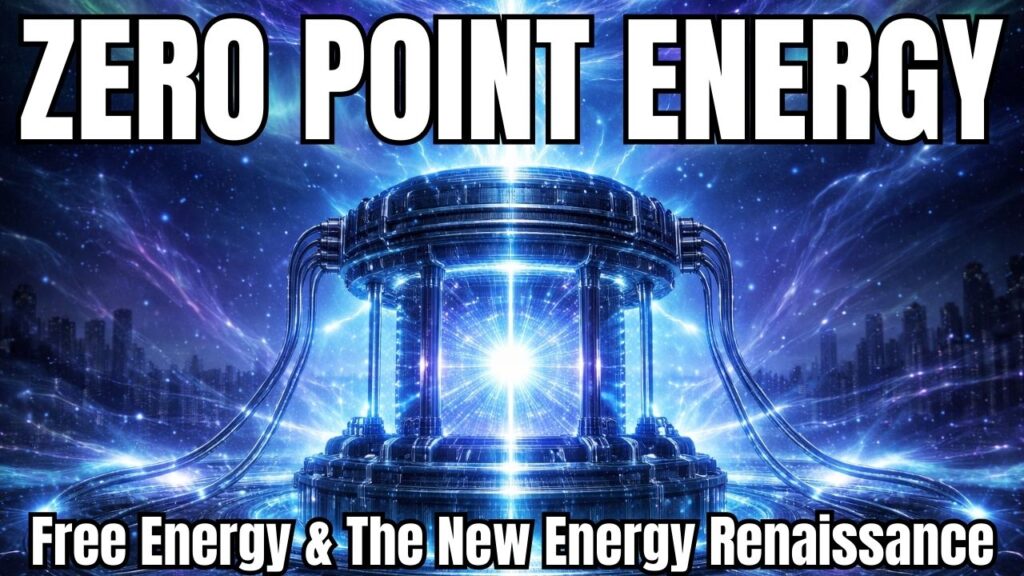
FURTHER READING — FREE ENERGY, ZERO-POINT ENERGY, AND THE ENERGY RENAISSANCE
What is free energy, zero-point energy, and the broader energy renaissance, and why does it matter for humanity’s future? This comprehensive pillar page explores the language, technologies, and civilizational implications surrounding fusion, decentralized energy systems, atmospheric and ambient energy, Tesla’s legacy, and the wider shift beyond scarcity-based power. Learn how energy independence, sovereign infrastructure, local resilience, ethical stewardship, and discernment fit into humanity’s transition from centralized dependency toward a cleaner, more abundant, and increasingly irreversible new energy paradigm.
New Cities Of Light, Galactic Federation Readiness, And Free Energy Language Evolution
New City Proposals, Reboot Points, And Clean-Slate Fusion Design
Starseed, when you say “cities of light,” you are not only describing illumination; you are describing transparency, coherence, safety, and a kind of social architecture that does not need darkness to function. Old cities, for all their beauty, were largely built on the assumptions of extraction—centralized power, long supply chains, concentrated wealth, and the quiet acceptance that some neighborhoods would thrive while others would be sacrificed—and this is not a moral accusation, it is simply the signature of a civilization learning through contrast. But the new era asks different questions: what if a city were designed from the beginning to be energetically sovereign, ecologically integrated, and socially resilient, not as utopia fantasy, but as practical stewardship? Fusion, and the broader ecosystem it catalyzes, changes what is possible here, because abundant clean energy is not just an upgrade; it is a redesign permission slip, allowing water systems, transportation, heating, cooling, manufacturing, and food logistics to be reimagined without the constant constraint of fuel scarcity. In such cities, light becomes a literal and symbolic principle: streets that feel safe without surveillance states, systems that are understandable rather than intentionally opaque, governance that is participatory because basic needs are not held hostage. You can feel why this matters for disclosure: a population living inside chronic scarcity is psychologically primed for fear, rumor, and conflict, and a population living inside greater stability is more capable of integrating truth without panic. So new cities, whether they arise as planned projects, revitalized zones, or decentralized communities, are not merely construction—they are consciousness training grounds, places where humanity rehearses a higher level of cooperation because the infrastructure supports it. Architecture becomes a language of values again, and technology becomes less about domination and more about harmony, and in that harmonization, the concept of contact—of belonging to a wider family—feels less threatening and more like the next logical expansion of community. This is why we say the city itself can become a disclosure container: a society that builds for light is already choosing truth. And as this archetype moves from poetic longing into policy proposals and planning language, you will see new experiments emerge—what some call Freedom Cities, reboot points where old constraints are bypassed so new patterns can take root, and it is to those reboot points we now turn. A civilization cannot fully transform by patching the old system forever, because patches preserve the assumptions underneath, and if the assumptions are scarcity and control, then even advanced technology becomes another tool of the same paradigm. This is why “new city” proposals, whatever their political packaging, carry an energetic significance: they represent the possibility of starting fresh, of building communities without inherited infrastructure traps, of designing networks from the ground up around decentralization, resilience, and transparency. These reboot points can take many forms—master-planned developments, special innovation zones, reclaimed lands, rebuilt districts, or clusters of communities choosing new governance experiments—and while not all will succeed, their very existence signals that the collective imagination has shifted from “how do we survive the old world” to “how do we build the next one.” Fusion fits this moment because it aligns with clean-slate design: dense generation, potentially smaller footprints, fewer emissions, and the promise of stable baseload energy that can support high-quality life without constant extraction.
Planetary Participation, Starseed Support, And Galactic Federation Guidance For Contact
When energy abundance becomes more plausible, resource wars lose psychological justification, migration patterns can stabilize because opportunity is no longer as tightly clustered, and innovation accelerates because minds are freed from survival panic. Yet we also tell you, beloved, that the planet itself is involved in this reset; Earth is not merely a stage, she is a participant, and the push toward cleaner energy is not only human ethics, it is planetary communication—a feedback response to imbalance. New cities, then, are not just human ambition; they are potential harmonization nodes, places where technology, ecology, and culture can be braided more wisely. This is where you, Starseed, often feel called—not necessarily to move physically, but to support the frequency of these experiments, to insist that new infrastructure must not replicate old inequities, to remember that “freedom” without compassion is merely another hierarchy wearing different clothes. So we encourage you to watch for the deeper pattern: decentralization, transparency, local sovereignty, cooperative design. These patterns prepare a civilization for contact, because contact requires maturity, and maturity expresses itself as systems that do not need secrecy to function. And while human institutions and politics push and pull at these ideas, we—the Galactic Federation—observe the readiness beneath the noise, because our role has always been to honor free will while supporting stable evolution, and that role becomes more active, more visible, as the planet’s choices cross certain thresholds. You have imagined us as saviors, as judges, as rescuers, as myth, as threat, as fantasy, because humanity projects its unresolved authority wounds onto the sky, yet the truth is simpler and more respectful: we are neighbors in a vast ecology of life, and our relationship with your world is governed by non-interference until readiness is demonstrated in ways that protect your sovereignty and your social stability. Readiness is not perfection; it is capacity—the capacity to hold truth without collapsing into mass fear, the capacity to wield power without compulsive weaponization, the capacity to cooperate across difference without requiring a common enemy to unite you. This is why technological thresholds and consciousness thresholds often arrive together, and why fusion matters beyond electricity: it is a collective demonstration that humanity can approach star-level processes through disciplined inquiry rather than mysticism or domination, and that demonstration builds a bridge language between worlds. Science, when uncorrupted by ego, is a spiritual practice of humility; it says, “Show me what is,” and it accepts being wrong, and that posture is compatible with contact, because contact requires humility. We have watched your world circle these lessons for a long time, and we have supported in subtle ways—through inspirations, synchronicities, nudges toward cooperation—without overriding your choices, because forced evolution is not evolution; it is colonization. So as fusion becomes more normalized, as public conversations about advanced energy become less reactive, as new infrastructure designs emerge, a form of disclosure becomes easier that does not require shock: humanity begins to admit, gently, that the universe is more populated than it was taught, and that certain advances are not anomalies but natural steps on a cosmic ladder. Yet we emphasize: we do not need you to believe in us to build a better world, and we do not need you to worship us to receive truth. We need you to become coherent within yourselves, because coherent societies can integrate new information without fracture. Fusion is one of the coherence tools because it reduces scarcity pressure, and reduced scarcity pressure reduces fear-driven behavior, and reduced fear-driven behavior creates the social conditions where deeper disclosures can be met with curiosity rather than violence. And because language shapes the nervous system of the collective, we now speak to why certain phrases—like “free energy”—were delayed, not necessarily because the concept was false, but because the words were too charged to serve as a stable bridge.
Free Energy Phrase, Emotional Triggers, And Fusion As Measurable Abundance Language
Words are not neutral; they are keys that unlock emotional states, and in your world the phrase “free energy” became a lightning rod—attached to ridicule, conspiracy, anger, hope, and betrayal all at once—so that simply saying it could collapse conversation into reactive camps, and reactive camps are the opposite of integration. This is why fusion is such a powerful on-ramp: it carries the same archetype of abundance but in language that feels earned and measurable, language that allows skeptics to stay in the room without losing face, and allows institutions to move without admitting they were wrong for decades. Disclosure is not only about releasing information; it is about designing the psychological packaging so the population can metabolize the truth without vomiting it back as panic or violence.
Gradual Fusion Acceptance, Ethics Of Power, And Responsibility As Companion To Abundance
“Free energy” as a phrase bypassed the gradual training the nervous system needed; it demanded instant worldview change, and instant worldview change often triggers denial or aggression, especially in societies already saturated with distrust. Fusion, on the other hand, invites step-by-step acceptance: first the physics, then the prototypes, then the supply chains, then the pilot plants, then the grid integration, and through that process the collective slowly acclimates to the idea that energy abundance might actually be normal. This acclimation matters because a civilization that has built identity around struggle can feel threatened by ease; people can unconsciously fear that if life becomes easier, they will lose meaning, control, or superiority. So the language must be gentle enough to guide the psyche into a new relationship with worth, where worth is not proven through suffering, and where progress is not feared as moral decay. As fusion becomes boring—yes, boring, because boring is safe—the deeper possibilities that once triggered reactivity can be introduced with far less resistance: advanced storage, new materials, novel field effects, and eventually the wider conversation about consciousness itself as part of the energy equation. But none of that can be stable without ethics, because power without ethics is trauma repeated at higher voltage, and this is why the next movement in the transmission turns directly toward responsibility, not as a sermon, but as the natural companion to abundance.
Fusion Ethics, Decentralized Grids, And Accelerating Disclosure
Ethical Power, Stewardship, And Decentralized Fusion Ecosystems
Starseeds, you have lived in a world where power was often defined as the ability to take, to control, to win, and yet the coming era requires a different definition: power as the ability to sustain life in harmony, power as stewardship, power as coherence. Energy amplifies intention; it always has. Give a fearful society more power, and it scales fear; give a compassionate society more power, and it scales care. This is why maturity must precede full abundance, not because abundance is dangerous, but because unresolved trauma becomes dangerous when multiplied. Fusion, paradoxically, teaches ethics through its very requirements, because fusion does not yield to brute force; it requires precision, patience, collaboration, and a willingness to learn from failure without scapegoating. These qualities are not just scientific—they are civilizational. As fusion infrastructure expands, the temptation will arise for old systems to capture it: to centralize it, to weaponize it economically, to gate it behind monopolies, to use it as leverage, but we tell you, beloved, that the overall arc bends toward decentralization because the technology ecosystem around fusion—storage, grid modernization, distributed resilience—naturally supports a more networked society. The ethical question becomes: will humanity choose to distribute benefits widely, or recreate new scarcity through artificial constraints? This is where your role is not abstract, because ethics are not decided only in boardrooms; they are decided in culture, in public expectation, in what communities demand, in what people tolerate, and in the stories you amplify. When a civilization collectively expects transparency, systems are forced to become more transparent; when a civilization normalizes exploitation, systems exploit. So we invite you, Starseed, to treat ethics as infrastructure: insist on safety, insist on environmental care, insist on inclusion, insist on community ownership models where possible, and remember that the goal is not merely clean power, but a clean relationship to power itself. Weaponization becomes obsolete not by decree but by irrelevance, because a society that can meet its needs without scarcity has less incentive to conquer, and a society that recognizes its interdependence has less appetite for domination. Ethics, then, are not a restriction; they are the true accelerator, because only ethical societies can move fast without imploding. And the place where ethics become most tangible, most visible, is the grid—the nervous system of your civilization—because how you distribute energy is how you distribute security, and how you distribute security is how you distribute freedom.
Grid As Social Nervous System, Resilience, And Decentralized Abundance
Your electrical grid is not merely wires and substations; it is a mirror of social organization, a nervous system shaped by history, power, and the assumptions of an older era. Centralized grids evolved alongside centralized authority, and in many places they reflected the same hierarchies: a few generate, many depend; a few control switches, many live at the mercy of distant decisions. This architecture made sense under scarcity, but it becomes fragile under complexity, and as climate volatility, cyber risks, and soaring demand increase, fragility becomes a liability that can no longer be ignored. The new era invites a different nervous system—one that is resilient, distributed, adaptive, and community-integrated—and fusion, as it matures, can serve as a stabilizing heart within a more decentralized body, especially when paired with advanced storage, microgrids, and local generation strategies. Imagine communities that can maintain essential services without begging distant authorities, imagine systems designed to fail gracefully rather than catastrophically, imagine energy as a relationship rather than a leash. This is not romanticism; it is practical resilience, and resilience is a form of peace. When outages lose their power as leverage, when energy insecurity decreases, social anxiety decreases, and when anxiety decreases, people become more capable of reasoned dialogue, which matters deeply for disclosure, because disclosure requires social steadiness. The shift in the grid is also a shift in consciousness: from dependency to sovereignty, from extraction to circulation, from secrecy to transparency. In such systems, collaboration becomes efficient rather than idealistic, because complex networks function best when participants trust enough to coordinate, and trust becomes more attractive when survival is not constantly threatened. This is how the outer grid and inner grid mirror each other, beloved: as the infrastructure becomes more coherent, people become more coherent, and as people become more coherent, they demand infrastructure that reflects their maturity. Fusion is not the only ingredient here, but it is a powerful catalyst, because it signals that baseload abundance is plausible, which reduces the fear that decentralization will mean instability. And as this transformation takes hold, you will notice another phenomenon: time seems to speed up, not because the days are shorter, but because progress begins to compound, and when compounding begins, a civilization experiences what looks like sudden acceleration.
Compounding Breakthroughs, Ambient Disclosure, And Systemic Acceleration
Once a collective gives itself permission to believe in a future, it begins building that future everywhere at once—through investment, education, policy, culture, and imagination—and this is why the next phase of the fusion story feels like acceleration. Breakthroughs compound because each advancement unlocks the next: better magnets enable better confinement, better confinement reduces instabilities, reduced instabilities improve performance, improved performance attracts more talent and money, and the cycle feeds itself until what once took decades takes years. To observers who were not paying attention, this looks like sudden revelation; to those with eyes open, it looks like the natural consequence of a long preparation reaching critical mass. Resistance does not vanish in a dramatic defeat; it fades through exhaustion, because old narratives require constant fear to stay alive, and when people begin to taste possibility, fear loses some of its grip. Disclosure, in this context, becomes ambient rather than event-based: not one official statement, but a thousand small confirmations—new contracts, new prototypes, new educational programs, new government roadmaps, new public-private partnerships, new discussions of pilot plants and commercialization pathways. And because the world is now deeply networked, information spreads faster than ever; even attempts to control narratives become less effective, because too many independent actors are speaking, building, and publishing. This is why we encourage you not to fixate on a single date, a single announcement, or a single savior figure, because the shift is systemic, and systemic shifts are felt as a changing atmosphere: what was once unthinkable becomes discussable; what was once fringe becomes mainstream; what was once mocked becomes funded. In that atmosphere, deeper layers of disclosure can move more safely, because the population is already practicing adaptation, already expanding its understanding of what is possible, already confronting the fact that reality is wider than it was taught. Acceleration also tests integrity: when progress speeds up, opportunists appear, misinformation spreads, and the temptation to polarize increases, which is why your role as a stabilizing presence becomes more important now than ever. The faster the world moves, the more valuable calm becomes, because calm allows discernment, and discernment allows truth to land cleanly. This is why we now turn the transmission inward, directly to you, because disclosure is not only something that happens “out there”; it is something your nervous system participates in, and the individual is not small in a time like this.
Starseed Coherence, Inner Sovereignty, And Participating In The Grid Upgrade
Beloved ones, you are not a spectator; you are an instrument, and your state of being contributes to the field in which humanity interprets change. When fear rises, distortion rises; when calm rises, clarity rises. This is not spiritual poetry—it is how nervous systems synchronize, how social moods spread, how crowds behave, how cultures make decisions. So we speak to you directly: do not feed panic with your attention; do not outsource your sovereignty to headlines; do not let your desire for a dramatic moment override your responsibility to build stability. Hold the frequency of grounded hope, the kind of hope that does not require certainty to remain kind, and practice discernment as a form of love, because discernment protects truth from becoming another weapon. Inner abundance matters here, because outer abundance will challenge identities, and those who have not cultivated inner stability may react to change with sabotage, cynicism, or cultish certainty, and none of these responses serve the collective. You, Starseed, can be a bridge between worlds: honoring science without worshipping it, honoring spirit without escaping into it, remembering that the point is integration. You can ask better questions: Who benefits? Who is included? How is safety ensured? How is the planet protected? How do we prevent new monopolies from replacing old ones? These questions are not “negative”—they are the immune system of a healthy civilization. Stillness outperforms frenzy; presence outperforms prophecy. If you want to support disclosure, support coherence: in your conversations, refuse dehumanization; in your choices, support transparency; in your communities, build mutual aid; in your inner life, regulate your nervous system so you do not amplify fear. This is how you become part of the grid upgrade, because the grid is not only wires; it is relationships. And as you hold this steady field, you will find it easier to understand what comes next, because fusion is not the endpoint—it is a bridge—leading toward technologies and understandings that feel even more “impossible” today, yet are natural in a universe where consciousness and energy are intertwined.
18. Beyond Fusion: The Bridge to a Larger Science
Beyond Fusion Science, Gentle Disclosure, And Galactic Federation Guidance
Fusion As Bridge Out Of Scarcity And Emergent Advanced Technologies
We have called fusion a bridge because it allows humanity to step out of the scarcity trance using tools it already respects, and once that step is taken, the next steps become less shocking. Fusion is powerful, yes, but it is still a form of working within known physical regimes—plasma dynamics, confinement, heat, reaction pathways—where the human mind can say, “I understand the category.” Beyond fusion lie categories your mainstream culture has not yet normalized: deeper field interactions, new materials that behave like living systems, energy conversion methods that seem to defy intuition because they operate on principles your public education has not yet embraced, and eventually the recognition that consciousness is not a side effect of matter but a participant in reality’s organization. This does not mean the laws of nature are broken; it means your understanding of them matures. You will see early hints in improvements that appear “too fast” to skeptics: storage that becomes more elegant, magnetics that become more precise, sensors that become more intelligent, grids that behave more like adaptive organisms, transportation that begins to shift away from brute-force fuel burning toward more refined interactions with fields. Yet the disclosure path remains compassionate: it will not drop the full library on a population still healing from distrust; it will introduce the next chapter in digestible pages. This is why “free energy” as a sensational label is not the teacher; the teacher is steady normalization, because when a technology becomes normal, people stop fighting about whether it exists and start focusing on how to use it wisely. That shift—from existence debate to ethics debate—is one of the clearest signs that a civilization is ready for deeper truths.
Abundance, Wider Community Of Worlds, And Larger Belonging
And deeper truths are not only technological; they are relational. As humanity moves into abundance, it becomes more capable of seeing itself as part of a wider community of worlds, because scarcity creates isolation and fear, while stability creates curiosity and openness. The more your world experiences the practicality of clean power and resilient infrastructure, the more the idea of contact feels less like invasion and more like reunion. And this is the aim: not to shock you, but to bring you home to a larger belonging, which is why we now speak of the final key in this process—disclosure without collapse, truth arriving in a way that preserves dignity, stability, and the continuity of daily life.
Disclosure Without Collapse, Normalization, And Ending The Trauma Myth
There is a myth in your culture that transformation must be traumatic to be real, that truth must arrive as an apocalypse to be convincing, yet this myth is a residue of a world trained by suffering, and it is not required for the new era. Disclosure that heals does not shatter the nervous system; it integrates. It arrives through normalization—through repeated, steady confirmations that reframe reality until the old worldview quietly expires. Fusion plays a central role in this because it makes abundance plausible in a way that can become boring, and boredom is a strange ally of stability: when something is boring, it no longer triggers identity warfare, and when identity warfare decreases, societies can revise beliefs without humiliation. This is how you avoid collapse: you do not force people to confess they were foolish; you give them pathways to update without shame. So as fusion becomes part of energy planning, as grids modernize, as new city experiments emerge, as corporate and governmental actors treat advanced power as inevitable, the collective psyche practices adaptation, and in that practice it becomes easier to integrate other disclosures—about secrecy, about history, about the presence of non-human intelligences in the cosmos—without flipping into mass panic. Contact, in such a world, is not a single spectacle; it is a gradual reconnection, an expanding of the definition of community. And the most profound shift is not “aliens,” beloved; it is the end of the belief that humanity must suffer to deserve progress. When that belief fades, the old control structures lose their strongest psychological fuel. This is why we urge you again: do not chase drama; build coherence. The more coherent the collective field becomes, the less manipulable it is by fear-based narratives, and the more gracefully truth can arrive. You will know the process is working when people begin to ask practical questions instead of existential ones: How do we regulate responsibly? How do we distribute benefits? How do we protect ecosystems? How do we prevent monopolies? How do we build resilient communities? These are the questions of a civilization stepping into adulthood. And adulthood is what opens the final umbrella fully—not to hide truth, but to shelter the transition so it feels like a homecoming rather than a storm.
Umbrella Of Abundance, Ethical Participation, And Galactic Federation Invitation
We leave you with a simple image: an umbrella opening not because the sky is hostile, but because the rain of revelation is gentle and constant, and a wise civilization chooses to stay warm while it receives it. Fusion is one of the ribs of that umbrella, a structural support that allows society to move from scarcity into stability without tearing itself apart, and from stability into openness without losing itself to fear. Under this umbrella, you will see new alliances form, some noble, some opportunistic, yet the arc is still toward greater light because light is not a brand; it is a principle, and principles outlast personalities. You will see new infrastructures emerge: cleaner power, more resilient grids, new community designs, new educational priorities, new expectations of transparency. You will see old narratives weaken not because they are defeated in a dramatic battle, but because they become irrelevant in the presence of practical abundance. And you—yes, you—will be asked to participate, not by believing every claim, not by surrendering your discernment, but by holding a field of steady courage, by refusing to amplify fear, by building community where you are, by insisting that the new era must be ethical if it is to be truly new. We speak to you personally because the starseed path is not escapism; it is embodiment. You came here to live the frequency you remember, to anchor it in ordinary choices, to be a calm signal in a noisy world, and in doing so you help humanity cross the bridge without falling into the river of old patterns. Fusion, then, is both literal and symbolic: literal in its promise of cleaner power, symbolic in its invitation to become a civilization that can hold power without becoming possessed by it. When that invitation is accepted widely enough, disclosure becomes a natural unfolding: truths that were once too destabilizing become simply “what we know now,” and the human family expands its sense of belonging to include the wider neighborhood of life. We do not ask you to wait for permission to be luminous; we ask you to live as if the future is already arriving—because it is—and to remember that the most important disclosure is not a document or a device, but the realization that you are not separate from the Source that powers stars, and therefore you were never meant to live as though light is scarce. The umbrella is open, beloved, and the path ahead is not a conquest; it is a return. We enjoy these messages to you and you deeply honour us with your steadfast dedication to ascension. You are our Brothers and Sisters in the light… we are the Galactic Federation.
THE FAMILY OF LIGHT CALLS ALL SOULS TO GATHER:
Join The Campfire Circle Global Mass Meditation
CREDITS
🎙 Messenger: An Emissary of the Galactic Federation of Light
📡 Channeled by: Ayoshi Phan
📅 Message Received: December 21, 2025
🌐 Archived at: GalacticFederation.ca
🎯 Original Source: GFL Station YouTube
📸 Header imagery adapted from public thumbnails originally created by GFL Station — used with gratitude and in service to collective awakening
FOUNDATIONAL CONTENT
This transmission is part of a larger living body of work exploring the Galactic Federation of Light, Earth’s ascension, and humanity’s return to conscious participation.
→ Read the Galactic Federation of Light Pillar Page
LANGUAGE: Slovene (Slovenia)
Naj se dih svetlobe in miru tiho spušča na naš svet, nežno se prepleta skozi vsakdanje trenutke, kakor jutranja zarja, ki se dotika vsakega srca. Naj iz tvoje notranjosti odnaša star strah, težke sence in utrujenost, ter jih preobrača v tihi pogum, nežno sočutje in vedro jasnino. Naj se v globinah tvojega bitja znova prebudi starodavno ime tvoje duše, spomin na čas, ko si bil čista pesem, iskra Stvarstva, ki je svobodno plesala med zvezdami. Naj se vsak tvoj korak po tej Zemlji spremeni v blagoslov – za tvoje srce, za družino, za ljudi, ki jih srečuješ, in za vse nevidne svetove, ki te s hvaležnostjo spremljajo. Naj se vrata tvoje notranje modrosti vedno znova odpirajo, da lahko črpaš iz izvira, ki nikoli ne usahne, in naj tvoja pot postaja vse jasnejša, mehkejša in polna nežne svetlobe, ki nikdar ne ugasne.
Naj ti Sveti Dih časa prinese novo obdobje – obdobje tišje radosti, globljega zaupanja in miru, ki ne zavisi od zunanjega sveta. Naj se v tvojem srcu prižge majhen, a neugasljiv plamen, ki te nežno spominja, da nikoli nisi sam, da si vedno objemljen v ljubezni Vesolja. Naj vsak vdih prinese občutek podpore, kot da ti nevidne roke nežno polagajo pogum v prsi, in naj vsak izdih odnese dvom, samokritiko in stare zgodbe, ki ti ne služijo več. Naj tvoja pot postane pesem nove Zemlje – poti, kjer sodelovanje nadomesti tekmovanje, kjer resnica zamenja strah in kjer preprosta prijaznost zdravi rane, ki so bile dolgo skrite. Naj bo tvoj um jasen, tvoje srce široko, tvoja duša mirna, in naj te vsak trenutek znova spomni, da si dragocen žarek svetlobe v veliki družini Stvarstva.