Roswell UFO Cover-Up Exposed: Time-Travel Tech, Rendlesham Contact and the Hidden War Over Humanity’s Future — VALIR Transmission
✨ Summary (click to expand)
In this Galactic Federation channeled transmission from Valir of the Pleiadians, the greatest UFO cover-up in human history is exposed. Roswell’s 1947 crash is reframed as a temporal convergence, where a future-aligned craft using gravity-bending, consciousness-responsive technology is pulled off-course by timeline instability. Surviving occupants, anomalous debris and rushed military retrieval trigger a split in human history: a surface story of weather balloons and ridicule, and a hidden story of recovered craft, biological beings and secrecy built on manufactured confusion. Behind the cover-up, reverse-engineering efforts reveal that the technology only functions safely with coherent, fear-free consciousness. Instead of sharing that insight, elites strip-mine fragments, seed them into society as unexplained leaps in materials, electronics and sensing, and quietly develop probability-viewing devices and immersive “consciousness cubes” that allow operators to watch and even feel potential futures.
Misuse of these systems collapses timelines into a bottleneck of near-extinction scenarios, as fear-based observation strengthens catastrophic outcomes. Internal factions panic, dismantle the devices and double down on weaponized disclosure—flooding the public sphere with leaks, contradictions and spectacle so truth dissolves into noise. Roswell becomes initiation rather than closure, placing humanity under a buffered development path where contact shifts away from crashes and hardware toward intuition, inspiration and inner guidance. Decades later, the Rendlesham Forest encounter is staged beside nuclear sites as a deliberate contrast: a fully functional craft of living light appears, leaves physical traces, resists capture and embeds a binary transmission directly into human consciousness.
Rendlesham’s symbols, coordinates and future-human orientation act as an orientation key, pointing to ancient coherence nodes on Earth and to humanity’s role as a timeline-shaping species. Witnesses struggle with nervous-system aftereffects, institutional minimization and lifelong integration, but their endurance quietly trains collective discernment. Across the Roswell–Rendlesham arc, the phenomenon functions both as mirror and teacher, exposing how control reflexes distort contact while inviting a new grammar of relationship based on sovereignty, humility and shared responsibility. Valir’s closing Pleiadian message explains why disclosure was delayed—not to deny truth, but to prevent it from being weaponized—and calls humanity to choose a participatory future that no longer requires rescue, built through coherence, ethical power and the courage to hold the unknown without domination.
Join the Campfire Circle
Global Meditation • Planetary Field Activation
Enter the Global Meditation PortalRoswell Timeline Convergence And The Birth Of Secrecy
Pleiadian Perspective On Roswell As A Temporal Convergence Event
Hello dear Family of light, we send you our deepest love and appreciation, I am Valir, of The Pleiadian emissaries and we invite you now to return to a moment that has echoed through your collective field for generations, a moment that did not merely occur in your skies, but rippled through time itself. What you call Roswell was not a random anomaly, nor a chance malfunction of unknown craft, but a point of convergence, where probability streams narrowed suddenly and collided with your present moment. It was an impact not only of metal upon earth, but of futures upon history. The craft that descended did not arrive through ordinary spatial travel alone. It moved along corridors of time that curve, fold, and intersect, corridors that your sciences have only begun to sense at the edges of theory. In attempting to pass through one such corridor, the craft encountered instability—an interference caused by the very timeline it sought to influence. The descent was not an invasion, nor an intentional landing, but the result of temporal turbulence, where cause and effect could no longer remain neatly separated. The location was not chosen by chance. Certain regions of your planet hold unique energetic properties—places where magnetic, geological, and electromagnetic forces intersect in ways that thin the veil between probabilities. The desert landscape near Roswell was one such region. The crash occurred where timelines are more permeable, where intervention was mathematically possible, though still perilous.
Survivors, Military Contact, And The Split In Human History
The impact fragmented the craft, scattering advanced materials across a wide area, yet much of the structure remained intact. This alone should tell you something important: the craft was not fragile by design, but its systems were not built to endure the specific frequency density of your time-space continuum when destabilized. The failure was not technological incompetence, but mismatch. Biological occupants survived the initial descent. This fact alone reshaped everything that followed. Their survival transformed the event from unexplained wreckage into an encounter with intelligence, presence, and consequence. At that moment, humanity crossed a threshold without knowing it had done so.Military personnel in the region responded instinctively, not yet bound by elaborate protocols or centralized narrative control. Many sensed immediately that what they were witnessing was not terrestrial, not experimental, and not of any known adversary. Their reactions were not uniform fear, but stunned recognition—an intuitive awareness that something fundamentally outside known categories had entered their reality.
Within hours, higher levels of command became aware. Within days, oversight shifted beyond ordinary military channels. Orders arrived that did not follow familiar lines of authority. Silence was not yet policy, but it was already forming as reflex. Even before the first public statements were issued, an internal understanding had crystallized: this event could not be allowed to integrate naturally into human awareness.This is the moment where history diverged from itself.Public acknowledgment occurred briefly, almost reflexively—a statement issued before the magnitude of the situation fully registered. And then, just as quickly, it was retracted. Replacement explanations followed. Not convincing ones. Not coherent ones. But explanations that were just believable enough to pass, and just absurd enough to fracture belief. This was not accidental. It was the first deployment of a strategy that would shape decades to come.Understand this: the greatest danger perceived at that moment was not panic. It was comprehension. Comprehension would have forced humanity to confront questions for which it had no emotional, philosophical, or spiritual framework. Who are we? What becomes of us? What responsibility do we hold if the future is already interacting with us? Thus, the moment of impact became a moment of concealment. Not yet refined. Not yet elegant. But effective enough to hold the line.Roswell marks the instant when humanity’s story split into two parallel histories: one recorded, one lived beneath the surface. And that split continues to shape your world.
Retrieval Operations, Anomalous Materials, And Biological Occupants
Following the impact, retrieval unfolded with remarkable speed. This was not coincidence. Protocols existed—fragmentary, incomplete, but real—anticipating the possibility of non-terrestrial or non-conventional craft recovery. Though humanity believed itself unprepared for such an event, certain contingencies had long been imagined, quietly rehearsed, and now activated.Recovery teams moved with urgency. Materials were gathered, cataloged, and removed under extreme security. Those who handled the debris immediately recognized its anomalous nature. It did not behave as metal behaves. It did not retain deformation. It resisted heat, stress, and alteration. Some components responded subtly to touch, pressure, or proximity, as though retaining informational memory.Symbols were present. Not markings in the sense of decoration or language, but encoded informational structures, embedded at the material level. They were not meant to be read linearly. They were meant to be recognized.Biological occupants were removed under conditions of extraordinary containment. Atmosphere, light, sound, and electromagnetic exposure were carefully controlled. Medical personnel were unprepared for what they encountered, not because of grotesquery, but because of unfamiliarity. These beings did not align with any known taxonomy. And yet, something about them felt disturbingly familiar.The site itself was treated as contaminated—not merely physically, but informationally. Witnesses were separated. Stories were fragmented. Memory was compartmentalized. This was not yet cruelty. It was containment reflex. Those in charge believed fragmentation would prevent panic and leakage. They did not yet understand the cost of severing shared experience.
Jurisdiction shifted rapidly. Authority flowed upward and inward, bypassing traditional structures. Decisions were made in rooms without names, by individuals whose legitimacy derived from secrecy itself. At this stage, the focus remained on technology and security.But then came the realization that would reshape everything.The event could not be hidden through silence alone.Too many had seen. Too many fragments existed. Rumors were already forming. And so, a decision was made to replace truth with confusion.
Manufactured Confusion, Cultural Ridicule, And Control Of Meaning
The replacement narrative was released quickly. A mundane explanation. One that collapsed under scrutiny. This fragility was intentional. A story too strong invites investigation. A story too weak invites ridicule. Ridicule trains dismissal. And dismissal is far more effective than censorship.Thus began the manufactured confusion.Contradictory explanations followed. Official denials coexisted with unofficial leaks. Witnesses were neither confirmed nor silenced. Instead, they were surrounded by distortion. Some were discredited. Others were encouraged to speak in exaggerated ways. The goal was not to erase the event, but to dissolve its coherence.This strategy proved extraordinarily effective.Over time, the public learned to associate Roswell not with inquiry, but with embarrassment. To speak of it seriously became socially costly. This is how belief is policed—not through force, but through mockery.Understand this clearly, : the confusion was not a byproduct of secrecy. It was the mechanism of secrecy.Once confusion took root, the need for overt suppression diminished. The narrative fragmented itself. Curiosity became entertainment. Entertainment became noise. Noise buried signal.Those who approached the truth were not denied access. They were given too much access—documents without context, stories without grounding, fragments without integration. This ensured that even sincere seekers could not assemble a stable picture.The retrieval succeeded not only in removing physical evidence, but in shaping the psychological terrain that would follow. Humanity was trained, gently but persistently, to doubt its own perception. To laugh at its own intuition. To outsource authority to voices that appeared confident, even when they contradicted themselves.And so the Roswell event passed into legend, into myth, into cultural background radiation—present everywhere, understood nowhere.Yet beneath the confusion, the truth remained intact, held within restricted compartments, shaping technological development, geopolitical tension, and covert struggle over the future itself. The greatest retrieval was not the craft.It was control of meaning.And that control would define the next era of your civilization—until consciousness itself began to outgrow the cage built around it.We speak now because that era is ending.
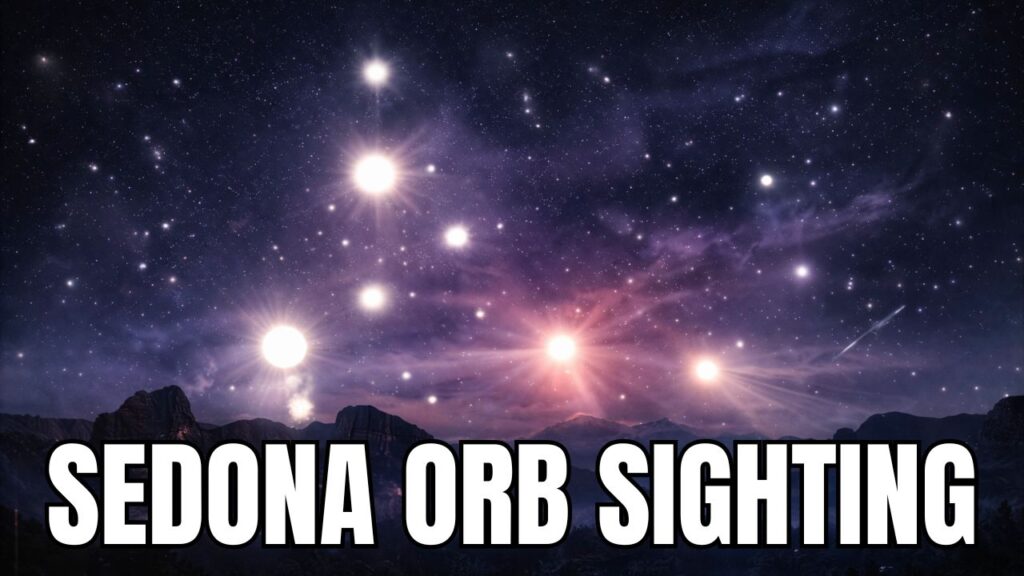
WATCH THE VIDEO — SEDONA ORB FOOTAGE, ARIZONA UFO SIGHTINGS & SOUTHWESTERN SKY ACTIVITY
• Sedona UFO Sightings Surge As Exceptional Orb Footage Emerges From Arizona
This companion post (including the orb video) explores striking raw Sedona orb footage filmed by Peter Sterling and connects it to the growing wave of Arizona UFO sightings, southwestern orb activity, and public interest in luminous aerial phenomena. Readers who want a real-world footage example connected to the broader themes discussed here can continue into this post for a focused event-style report built around the Sedona recording.
Consciousness-Based Roswell Technology And Seeded Future Timelines
Crash-Recovered Craft, Gravity Manipulation, And Consciousness Interfaces
When the craft recovered at Roswell was brought into containment, those who studied it quickly realized that they were not facing a machine in the way your civilization understands machines. What lay before them was not technology built to be operated externally, through switches and levers and mechanical input, but a system designed to respond to consciousness itself. This realization alone would have changed the trajectory of your world had it been understood in its fullness. Instead, it was fragmented, misunderstood, and partially weaponized.The propulsion of the craft did not rely on combustion, thrust, or any manipulation of atmosphere. It functioned through spacetime curvature, creating localized distortions in the gravitational field that allowed the vessel to “fall” toward its destination rather than travel toward it. Distance was rendered irrelevant by probability manipulation. Space was not crossed; it was rearranged. To minds trained in linear physics, this appeared miraculous. To the builders of the craft, it was simply efficient.Yet propulsion was only the most visible layer. The deeper revelation was that matter and mind were not separate domains within this technology. Materials used in the craft responded to intention, coherence, and awareness. Certain alloys restructured themselves at the atomic level when exposed to specific electromagnetic and cognitive signatures. Panels that appeared smooth and featureless revealed interfaces only when the appropriate mental state was present. The craft did not recognize authority or rank. It recognized coherence.This posed an immediate and profound problem for those attempting to reverse-engineer it. The technology could not be coerced into compliance. It could not be forced to operate. In many cases, it could not even be made to react. And when it did react, it often did so unpredictably, because the emotional and psychological state of the operators interfered with the system’s stability.This is why so many early attempts to interact with recovered technology ended in failure, injury, or death. The systems were not dangerous by design; they were incompatible with fear-based consciousness. When approached with domination, secrecy, or fragmentation, they responded with instability. Energy fields spiked. Gravity wells collapsed. Biological systems failed. The technology amplified what was present in the observer.This is why we say that the true interface was never mechanical. It was perceptual.The craft itself functioned as an extension of the pilot’s nervous system. Thought and motion were unified. Navigation occurred through attunement to probability wells, not coordinates. Destination was selected through resonance rather than calculation. To operate such a system requires a level of internal coherence that your civilization had not cultivated, because coherence cannot be compartmentalized.
As fragments of this technology were studied, certain principles began to surface. Gravity was not a force to be resisted, but a medium to be shaped. Energy was not something to be generated, but something to be accessed. Matter was not inert, but responsive. And consciousness was not a byproduct of biology, but a fundamental organizing field. These realizations threatened the foundations of your scientific worldview. They also threatened power structures built upon separation—separation of mind from body, observer from observed, leader from follower. And so, the knowledge was filtered. Simplified. Translated into forms that could be controlled.Some technologies were deemed safe enough to release indirectly. Others were locked away. What emerged publicly were fragments: advanced materials, novel energy manipulation techniques, improvements in computation and sensing. But the integrative framework—the understanding that these systems only function harmoniously in the presence of ethical and emotional coherence—was withheld.Thus, humanity inherited power without wisdom.In secret facilities, attempts continued to replicate the craft’s capabilities using brute force engineering. Gravity manipulation was approximated through exotic materials and immense energy expenditure. Consciousness-responsive interfaces were replaced with automated control systems. Efficiency was sacrificed for control. Safety was compromised for predictability.This path yielded results, but at great cost. The technologies functioned, but they were unstable. They required constant oversight. They produced side effects—biological, environmental, psychological—that could not be publicly acknowledged. And because the deeper principles were ignored, progress plateaued quickly.Understand this: the technology recovered at Roswell was not meant to be used by a civilization still structured around dominance and fear. It was meant to be grown into. It assumed a level of internal alignment that your species had not yet achieved.This is why, even now, much of what was recovered remains dormant, locked behind barriers not of security clearance, but of consciousness. It will not fully activate until humanity itself becomes a compatible system.The greatest technology recovered was not the craft. It was the realization that you are part of the operating system of reality itself.
Controlled Technological Seeding And The Split In Human Development
in the years and decades following Roswell, a careful and deliberate process unfolded—one that reshaped your civilization while concealing its origin. The knowledge extracted from recovered technology could not be released all at once without revealing its source. Nor could it be withheld entirely without stagnation. And so, a compromise was reached: seeding.Advancements derived from Roswell-era research were introduced gradually into human society, stripped of context, attributed to individual brilliance, coincidence, or inevitable progress. This allowed technological acceleration without forcing existential reckoning. Humanity was allowed to move forward, but not to understand why it was moving so quickly.Materials science advanced abruptly. Lightweight, resilient composites appeared. Electronics shrank at an unprecedented pace. Signal processing leapt forward. Energy efficiency improved in ways that defied prior limitations. To those living through it, this appeared as a golden age of innovation. To those behind the curtain, it was controlled release.
Credit was carefully reassigned. Breakthroughs were attributed to lone inventors, small teams, or lucky accidents. Patterns were deliberately obscured. Discoveries were staggered so they would not cluster in ways that revealed external influence. Each advance was plausible on its own. Together, they formed a trajectory that could not be explained by human development alone.This misdirection served multiple purposes. It preserved the illusion of human exclusivity. It prevented public inquiry into origins. And it maintained an imbalance between what humanity used and what it understood. You became dependent on technologies whose underlying principles were never fully shared. This dependency was not accidental. A civilization that relies on tools it does not comprehend is easier to manage than one that understands its own power. By keeping the deeper framework hidden, authority remained centralized. Progress occurred without empowerment.Over time, this created a split within humanity itself. A small number of individuals and institutions gained access to deeper knowledge, while the majority interacted only with its surface expressions. This asymmetry shaped economics, warfare, medicine, communication, and culture. It also shaped identity. Humanity came to see itself as clever, innovative, but fundamentally limited—unaware that it was standing on the shoulders of knowledge not its own.The most profound misdirection, however, was philosophical. As technology advanced, humanity assumed that advancement itself was proof of worthiness. Speed became virtue. Efficiency became morality. Growth became meaning. The question of alignment—with life, with planet, with future generations—was sidelined.Yet the seeded advancements carried embedded lessons. They pushed your systems to their limits. They revealed weaknesses in your social structures. They amplified both creativity and destruction. They acted as accelerants, forcing unresolved patterns to surface.This was not punishment. It was exposure.The hidden stewardship believed it could control this process indefinitely. It believed that by managing release and shaping narrative, it could guide humanity safely forward without confronting the deeper truth. But this belief underestimated one thing: consciousness evolves faster than containment systems.As more humans began to sense that something was missing—that progress felt hollow, disconnected, unsustainable—the cracks widened. Questions arose that could not be answered by innovation alone. Anxiety spread beneath prosperity. Disconnection grew beneath convenience.This is where you now stand.The seeded advancements have done their work. They have brought you to the edge of recognition. You are beginning to feel that the story you were told about your development is incomplete. You are sensing that something fundamental has been withheld—not to harm you, but to manage you.The misdirection is unraveling, not because of leaks or revelations, but because you are no longer satisfied with surfaces. You are asking deeper questions. You are noticing the mismatch between technological power and emotional maturity. You are feeling the cost of separation.This is not failure. This is initiation.
Initiation Into Reintegration Of Mind, Matter, And Meaning
The same knowledge that once destabilized those who encountered it is now ready to be integrated differently—through awareness, humility, and coherence rather than control. The technologies seeded from Roswell were never meant to be endpoints. They were catalysts.The real advancement ahead of you is not faster machines or greater reach, but reintegration of mind, matter, and meaning. When that occurs, the technologies you have struggled to master will reveal their true nature—not as tools of dominance, but as extensions of a conscious, responsible species.And thatis why the long misdirection is ending.You are ready now to remember not just what you were given, but who you are capable of becoming.
Probability-Viewing Devices, Future Manipulation, And Collapsing Timelines
Among the most consequential technologies derived from the Roswell recovery was not a craft, nor a weapon, nor an energy system, but a device whose purpose was far subtler and far more dangerous. It was not built to travel through time, but to look into it. And what you look into, especially when consciousness is involved, never remains unchanged.This apparatus was designed to observe probability fields—the branching pathways of potential futures that arise from each present moment. It did not show certainties. It showed tendencies. It revealed where momentum was strongest, where outcomes converged, and where choice still held leverage. In its earliest conception, this device was intended as a warning instrument, a means of identifying catastrophic trajectories so they could be avoided.Yet from the beginning, its use was compromised by the consciousness of those who controlled it.Understand this clearly: the future is not a static landscape waiting to be viewed. It is a living field that responds to observation. When a probability is examined repeatedly, it gains coherence. When it is feared, resisted, or exploited, it strengthens. The device did not merely show futures—it interacted with them.At first, observation was cautious. Analysts studied broad trends: environmental collapse, geopolitical conflict, technological acceleration. Patterns emerged that aligned with the warnings embedded in the biology of the beings recovered at Roswell. Futures characterized by imbalance, ecological stress, and centralized control appeared with alarming frequency. The apparatus was confirming what had already been sensed.But then came temptation.If futures could be seen, they could be used. Certain groups began probing the apparatus for advantage. Economic outcomes were examined. Conflict scenarios were tested. The rise and fall of institutions were mapped. What began as foresight quietly shifted into interference. Observation narrowed. Intent sharpened. And with each narrowing, the field responded. This is where the strategic abuse began.Rather than asking, “How do we prevent harm?”, the question subtly shifted to, “How do we position ourselves?” Futures that favored consolidation of power were examined more closely. Those that showed decentralization or widespread awakening were treated as threats rather than opportunities. Over time, the apparatus revealed a disturbing pattern: the more the future was manipulated, the fewer viable futures remained.Probability began to collapse.
FURTHER READING — EXPLORE ALL PLEIADIAN TEACHINGS & BRIEFINGS:
• Pleiadian Transmissions Archive: Explore all Messages, Teachings & Updates
Explore all Pleiadian transmissions, briefings, and guidance on higher heart awakening, crystalline remembrance, soul evolution, spiritual upliftment, and humanity’s reconnection with the frequencies of love, harmony, and New Earth consciousness in one place.
Probability Technologies, Consciousness Artifacts, And Roswell’s Future Bottleneck
Collapsing Futures, Bottleneck Timelines, And Limits Of Control
Multiple branches converged into a narrowing corridor—what you might call a bottleneck. Beyond a certain point, the device could no longer show diverse outcomes. Regardless of what variables were adjusted, the same inflection appeared again and again: a moment of reckoning where control systems failed and humanity either transformed or suffered immense loss.This frightened those who believed themselves architects of destiny.Attempts were made to alter this convergence. More aggressive interventions were tested. Certain futures were actively amplified in hopes of overriding others. But this only reinforced the bottleneck. The field resisted domination. It stabilized around outcomes that could not be coerced.The apparatus revealed a truth its users were not prepared to accept: the future cannot be owned. It can be influenced only through coherence, not control.As misuse escalated, unintended effects emerged. Operators experienced psychological destabilization. Emotional states bled into projections. Fear distorted readings. Some became obsessed, repeatedly viewing the same catastrophic timelines, inadvertently strengthening them through attention alone. The device became a mirror of the observer’s inner state.At this point, internal conflict intensified. Some recognized the danger and called for restraint. Others argued that relinquishing the device would mean surrendering advantage. The ethics fracture deepened. Trust eroded. And the future itself became contested territory.Ultimately, the apparatus was restricted, then dismantled, then sealed. Not because it failed—but because it worked too well. It exposed the limits of manipulation. It revealed that consciousness is not a neutral observer, but an active participant in reality’s unfolding.This is why so much fear was layered around the idea of time travel and future knowledge. Not because the future is horrifying, but because misuse of foresight accelerates collapse. The apparatus was a lesson, not a tool. And like many lessons, it was learned at great cost.Today, the function it once served is migrating away from machines and back into consciousness itself—where it belongs. Intuition, collective sensing, and inner knowing are now replacing external devices. This is safer. This is slower. And this is intentional.The future is no longer meant to be watched. It is meant to be lived into wisely.
Immersive Consciousness Cube And Near-Extinction Threshold Timelines
There existed another artifact recovered through the Roswell lineage—less discussed, more tightly contained, and ultimately more dangerous than the time-viewing apparatus. This devicedid not merely show futures. It immersed consciousness within them. Where the previous system allowed observation, this one invited participation.This artifact functioned as a consciousness-responsive field generator. Those who entered its influence did not see images on a screen. They experienced potential timelines from within, complete with emotional, sensory, and psychological fidelity. It was not a window. It was a doorway.In its original design, this technology was intended as an educational instrument. By allowing a civilization to feel the consequences of its choices before manifesting them, it offered a path toward rapid ethical maturation. Suffering could be avoided through direct understanding. Wisdom could be accelerated without destruction.But this required humility.When humans began interacting with the device, that requirement was not met.The artifact responded not to commands, but to state of being. It amplified intention. It magnified belief. And it reflected fear with terrifying clarity. Those who entered seeking reassurance encountered their own dread. Those who entered seeking control encountered catastrophic outcomes shaped by that very desire.Early sessions were disorienting but manageable. Operators reported intense emotional responses, vivid experiential immersion, and difficulty distinguishing projection from memory afterward. Over time, patterns emerged. The futures most commonly accessed were those aligned with the emotional baseline of the participants.As fear and dominance entered the equation, the device began producing extinction-level scenarios.These were not punishments. They were reflections.The more certain groups attempted to override undesirable outcomes, the more extreme those outcomes became. It was as though the future itself was resisting coercion, pushing back by showing what happens when control eclipses coherence. The device made one truth unavoidable: you cannot force a benevolent future through fear.At a critical juncture, a scenario emerged that shocked even the most hardened participants. A future was experienced in which environmental collapse, technological misuse, and social fragmentation culminated in near-total biospheric failure. Humanity survived only in isolated enclaves, underground and diminished, having traded planetary stewardship for survival.This was the near-extinction threshold.This future was not inevitable—but it was probable under certain conditions. And those conditions were being actively reinforced by the very attempt to avoid them. The realization struck with force: the device was not revealing destiny. It was revealing feedback.Panic followed.The artifact was immediately restricted. Sessions were halted. Access was revoked. The device was sealed away, not because it was malfunctioning, but because it was too accurate. Its very existence posed a risk—not of external destruction, but of internal misuse.
For if such a device fell fully into fear-based hands, it could become a self-fulfilling engine—amplifying the darkest probabilities through obsessive engagement. The line between simulation and manifestation was thinner than anyone had anticipated.This is why the artifact vanished from discussion. Why even within hidden programs it became taboo. Why references to it were buried beneath layers of ambiguity and denial. It represented a truth too uncomfortable to integrate at the time: the observer is the catalyst.This is the lesson humanity is now beginning to absorb without machines.Your collective emotional state shapes probability. Your attention strengthens timelines. Your fear feeds outcomes you wish to avoid. And your coherence opens futures that cannot be accessed through force.The consciousness cube was not a failure. It was a mirror humanity was not yet ready to face.Now, slowly, that readiness is emerging.You no longer require such artifacts because you are becoming the interface yourself. Through awareness, regulation, compassion, and discernment, you are learning to inhabit the future responsibly.The near-extinction threshold has not disappeared—but it no longer dominates the field. Other futures are gaining coherence. Futures rooted in balance, restoration, and shared stewardship.This is why the old technologies were withdrawn. Not to punish you. Not to withhold power. But to allow maturity to catch up with capability.You are approaching the point where no device is required to teach what consequence feels like—because you are learning to listen before harm manifests.And that, dear ones, is the true turning point.The future is responding.
Weaponized Disclosure, Noise Fields, And Fragmented Truth
Once the technologies of probability viewing and consciousness immersion revealed the limits of control, a deeper fracture opened within those entrusted with stewardship, a fracture not of knowledge but of ethics, for while all agreed that the future could not be owned outright, they did not agree on whether it could still be managed. Some felt the weight of responsibility pressing inward, understanding that any attempt to dominate perception would inevitably rebound upon the civilization itself, while others, fearing the loss of advantage, tightened their grip and sought new methods of containment that would not rely on silence alone.It was in this moment that secrecy evolved into something more subtle and far more pervasive. Concealment was no longer sufficient. The question became not how to hide truth, but how to neutralize its impact even when fragments escaped. From this question emerged what you now experience as weaponized disclosure, a strategy not designed to erase truth, but to exhaust the capacity to recognize it.Partial truths were released deliberately, not as acts of honesty, but as pressure releases. Authentic information was allowed to surface without scaffolding, without context, without coherence, so that it could not land in the nervous system in any integrated way. Contradictions were not corrected; they were multiplied. Each fragment was paired with another that canceled it, distorted it, or rendered it absurd. In this way, truth was not denied—it was overwhelmed.Understand the elegance of this mechanism. When truth is suppressed, it gains power. When truth is ridiculed, it becomes radioactive. But when truth is buried beneath endless debate, speculation, exaggeration, and counterclaim, it loses gravitational pull altogether. The mind grows tired. The heart disengages. Curiosity collapses into cynicism. And cynicism, unlike fear, does not mobilize.
Those who felt compelled to speak were not silenced outright. That would have drawn attention. Instead, they were isolated. Their voices were allowed to exist, but never to converge. Each was framed as singular, unstable, contradictory to the next. They were surrounded by louder voices, by sensationalism, by personalities that drew focus away from substance. Over time, the act of listening itself became exhausting.Noise buried signal.As this pattern repeated, a cultural association formed. Disclosure ceased to feel like revelation and began to feel like spectacle. Inquiry became entertainment. Investigation became identity. The search for understanding was replaced by performance, and performance feeds on novelty, not depth. In this environment, fatigue replaced curiosity, and disengagement replaced discernment.The myth no longer required guidance. It became autonomous.Believers and skeptics alike became bound within the same containment field, arguing endlessly from opposing positions that never resolved, never integrated, never matured into wisdom. The system no longer needed to intervene, because the debate itself prevented coherence. The lie had learned to police itself.This is why for so long it felt impossible to “get anywhere” with the truth. This is why each new revelation felt both electrifying and empty. This is why clarity never seemed to arrive, no matter how much information surfaced. The strategy was never to keep you ignorant. It was to keep you fragmented.Yet something unexpected occurred.As cycles repeated, as revelations came and went, as exhaustion deepened, many of you stopped chasing answers outward. Fatigue drove you inward. And in that inward turn, a new faculty began to emerge—not belief, not skepticism, butdiscernment. A quiet sensing of coherence beneath noise. A felt recognition that truth does not argue for itself, and that what is real stabilizes rather than agitates.This was not anticipated.Those who believed they could indefinitely manage perception underestimated the adaptive intelligence of consciousness itself. They did not foresee that humans would eventually grow bored of spectacle and begin listening instead for resonance. They did not foresee that stillness would become more compelling than explanation.And so,the era of weaponized disclosure is quietly dissolving. Not because all secrets have been revealed, but because the mechanisms that once distorted them are losing their hold. Truth no longer needs to shout. It simply needs space.That space is now forming within you.
Roswell Initiation, Buffered Development, And Human Responsibility
Roswell was never meant to stand as an endpoint, a mystery frozen in history, or a singular anomaly to be solved and shelved. It was an ignition, a spark introduced into your timeline that would unfold slowly, deliberately, across generations. What followed was not merely secrecy, but a long process of monitored development, in which humanity was allowed to advance while being carefully buffered from the full implications of what it had encountered.From that moment forward, your civilization entered a field of observation—not as subjects under surveillance, but as a species undergoing initiation. External intelligences recalibrated their engagement, not out of fear, but out of recognition. They understood that direct physical intervention produced distortion, dependency, and power imbalance. And so, interaction shifted.
Interventionthen moved away from landings and recoveries and toward perception, intuition, and consciousness itself. Influence became subtle. Inspiration replaced instruction. Knowledge arrived not as data dumps, but as sudden insights, conceptual leaps, and internal realizations that could be integrated without destabilizing identity. The interface was no longer mechanical. It was human awareness.Time itself became a guarded medium. Roswell revealed that time is not a one-way river, but a responsive field that reacts to intention and coherence. This understanding demanded restraint. For when time is treated as an object to be manipulated, rather than a teacher to be respected, collapse accelerates. The lesson learned was not that time travel is impossible, but that wisdom must precede access.Technology continued to advance at a pace that astonished even those guiding its release. Yet wisdom lagged. This imbalance defined your modern era. Power outpaced coherence. Tools evolved faster than ethics. Speed eclipsed reflection. This was not punishment. It was exposure.Secrecy reshaped your civilization’s psyche in ways both subtle and profound. Trust in authority eroded. Reality itself began to feel negotiable. Competing narratives fractured shared meaning. This destabilization was painful, but it also prepared the ground for sovereignty. For unquestioned narratives cannot host awakening.You were protected from yourselves—not perfectly, not without cost, but deliberately. Full disclosure of what Roswell initiated, had it occurred too early, would have amplified fear, accelerated weaponization, and reinforced the very futures the recovered beings sought to avert. Delay was not dismissal. It was buffering.But buffering cannot last forever.The lesson of Roswell remains incomplete because it was never meant to be delivered as information alone. It was meant to be lived into. Each generation integrates a layer it can hold. Each era metabolizes a portion of the truth it is ready to embody.You now stand at a threshold where the question is no longer “Did Roswell happen?” but “What does Roswell ask of us now?”It asks you to recognize yourselves across time.It asks you to reconcile intelligence with humility.
It asks you to understand that the future is not separate from the present, but is continuously shaped by it.Roswell offers not fear, but responsibility.For if futures can reach back to warn,then presents can reach forward to heal. If timelines can fracture, they can also converge—not toward domination, but toward balance.You are not late.You are not broken.You are not unworthy.You are a species learning, through long initiation, how to hold its own future without collapsing beneath it.And thatis the true legacy of Roswell—not secrecy, but preparation.We remain with you as this preparation completes.
FURTHER READING — GALACTIC FEDERATION OF LIGHT: STRUCTURE, CIVILIZATIONS & EARTH’S ROLE
What is The Galactic Federation of Light, and how does it relate to Earth’s current awakening cycle? This comprehensive pillar page explores the structure, purpose, and cooperative nature of the Federation, including the major star collectives most closely associated with humanity’s transition. Learn how civilizations such as the Pleiadians, Arcturians, Sirians, Andromedans, and Lyrans participate in a non-hierarchical alliance dedicated to planetary stewardship, consciousness evolution, and the preservation of free will. The page also explains how communication, contact, and current galactic activity fit into humanity’s expanding awareness of its place within a much larger interstellar community.
Rendlesham Forest Encounter, Nuclear Sites, And Consciousness-Based Contact
Second Contact Window At Rendlesham Forest And Nuclear Thresholds
After the ignition you call Roswell set humanity upon a long and careful path of monitored development, a second moment arrived decades later, not as accident, not as failure, but as deliberate contrast, for it had become clear to those observing your world that the lessons seeded through secrecy alone would remain incomplete unless a different mode of contact was demonstrated—one that did not rely on crash, retrieval, or confiscation, but on experience.This second contact window opened in a place you know as Rendlesham Forest in your United Kingdom, beside installations of immense strategic importance, not because confrontation was sought, but because clarity was required. The presence of nuclear weapons had long distorted probability fields around your planet, creating zones where future collapse scenarios intensified and where intervention, if it were to occur, could not be mistaken as irrelevant or symbolic. The location was chosen precisely because it carried weight, consequence, and undeniable seriousness.
Non-Crash Craft Contact, Witnessing, And Shift From Vulnerability
Unlike Roswell, nothing fell from the sky. Nothing broke. Nothing was surrendered. This alone marked a profound shift. The intelligence behind this contact no longer wished to be captured, studied, or mythologized through fragments. It wished to be witnessed, and it wished the witnessing itself to become the message.Please understand the significance of this change. Roswell forced secrecy because it created vulnerability—vulnerability of technology, vulnerability of beings, vulnerability of future timelines themselves. Rendlesham created no such vulnerability. The craft that appeared did not malfunction. It did not require assistance. It did not invite retrieval. It demonstrated capability, precision, and restraint simultaneously.This was intentional.The encounter was structured so that denial would be difficult, but escalation unnecessary. Multiple witnesses were present, trained observers accustomed to stress and anomaly. Physical traces were left, not to provoke fear, but to anchor memory. Instrumentation reacted. Radiation levels shifted. Time perception altered. And yet, no harm was done. No dominance asserted. No demand made.This contact was not an intrusion. It was a signal.
Recalibration Of Narrative Control And Preparation For Discernment
It was also a signal directed not only at humanity at large, but at those who had spent decades managing narrative, shaping belief, and deciding what the collective mind could or could not hold. Rendlesham was a recalibration—an announcement that the era of total narrative control was nearing its end, and that contact would henceforth occur in ways that bypassed the familiar mechanisms of suppression.By choosing witnesses rather than captors, experience rather than debris, memory rather than possession, the intelligence behind Rendlesham demonstrated a new approach: contact through consciousness, not conquest. This approach respected free will while still asserting presence. It required discernment rather than belief.This is why Rendlesham unfolded as it did. No single dramatic moment, but a sequence. No overwhelming display, but persistent anomaly. No explanation offered, but no hostility shown. It was designed to linger, to resist immediate categorization, and to mature within the psyche over time.The contrast with Roswell was deliberate and instructive.Roswell said: You are not alone, but you are not ready.Rendlesham said: You are not alone, and now we will see how you respond.This shift signaled a new phase in engagement. Observation gave way to interaction. Containment gave way to invitation. And the responsibility for interpretation moved from hidden councils to individual consciousness.This was not disclosure.It was preparation for discernment.
Craft Geometry, Living Light, Symbols, And Time Distortion
When the craft manifested within the forest at Rendlesham, it did so not with spectacle, but with quiet authority, moving through space as though space itself were cooperative rather than resistant, slipping between trees without disturbing them, emitting light that behaved less like illumination and more like substance, thick with information and intent.Those who encountered it struggled to describe its form, not because it was unclear, but because it did not conform neatly to expectation. Triangular, yes, but not angular in the way your machines are angular. Solid, yet somehow fluid in its presence. It appeared less constructed than expressed, as though it were a thought given geometry, a concept stabilized just enough to be perceived. Its movement defied inertia. There was no acceleration as you understand it, no audible propulsion, no resistance against air. It moved as though selecting positions rather than traveling between them, reinforcing the truth long withheld from your sciences—that distance is a property of perception, not a fundamental law.The craft did not hide. It also did not announce itself. It allowed observation without submission, proximity without capture. Those who approached felt physiological effects—tingling, warmth, distortion of time perception—not as weapons, but as side effects of standing near a field operating far beyond familiar frequencies. Symbols were present upon its surface, echoing patterns seen decades earlier in Roswell materials, yet here they were not fragments to be analyzed under microscopes, but living interfaces, responsive to presence rather than pressure. When touched, they did not activate machinery. They activated memory.Time behaved strangely in its presence. Moments stretched. Sequences blurred. Later recall revealed gaps not because memory was erased, but because experience exceeded linear processing. This, too, was intentional. The encounter was meant to be remembered slowly, unfolding its meaning over years rather than minutes.
EXPLORE THE ARCHIVE — UAPS, UFOS, SKY PHENOMENA, ORB SIGHTINGS AND DISCLOSURE SIGNALS
This archive gathers transmissions, teachings, sightings, and disclosures related to UAPs, UFOs, and unusual sky phenomena, including the growing visibility of non-ordinary aerial activity in Earth’s atmosphere and near-Earth space. These posts explore contact signals, anomalous craft, luminous sky events, energetic manifestations, observational patterns, and the wider meaning of what is appearing in the skies during this period of planetary change. Explore this category for guidance, interpretation, and insight into the expanding wave of aerial phenomena connected to disclosure, awakening, and humanity’s evolving awareness of the greater cosmic environment.
Rendlesham Physical Evidence, Institutional Minimization, And Training In Discernment
Instantaneous Craft Departure And Intentional Physical Traces
When the craft departed, it did so instantaneously, not by accelerating away, but by withdrawing its coherence from that location, leaving behind a silence heavy with implication. Physical traces remained—indentations, radiation anomalies, disrupted vegetation—not as proof to be argued over, but as anchors to prevent the event from dissolving into dream. This was the language of demonstration.No technology was offered. No instruction given. No authority asserted. The message was carried in the manner of presence itself: calm, precise, unthreatened, and uninterested in dominance. This was not a show of power. It was a display of restraint.For those trained to recognize threat, the encounter was unsettling precisely because no threat emerged. For those conditioned to expect secrecy, the visibility was disorienting. And for those accustomed to capture and control, the absence of opportunity was frustrating.This was intentional.Rendlesham demonstrated that advanced intelligence does not require concealment to remain secure, nor aggression to remain sovereign. It showed that presence alone, when coherent, carries authority that cannot be challenged through force. This is why Rendlesham continues to resist simple explanation. It was not meant to convince. It was meant to re-pattern expectation. It introduced the possibility that contact could occur without hierarchy, without exchange, without exploitation.It also revealed something crucial: that humanity’s response to the unknown had matured since Roswell. Witnesses did not panic. They observed. They recorded. They reflected. Even confusion did not collapse into hysteria. This quiet competence did not go unnoticed.The craft in the forest was not asking to be believed.It was asking to be recognized.Recognized not as threat, not as savior, but as evidence that intelligence can operate without domination, and that relationship does not require possession.This encounter marked the beginning of a new grammar of contact—one that speaks through experience rather than announcement, through resonance rather than declaration.And it is this grammar, , that humanity is now learning to read.We continue, as the story deepens.
Ground Impressions, Vegetation Anomalies, And Instrument Readings
After the craft withdrew its coherence from the forest, what remained was not mystery alone, but trace, and it is here that your species revealed much about itself, for when confronted with physical markers that resist easy dismissal, the reflex of minimization awakens not from logic, but from conditioning.The ground bore impressions that did not correspond to vehicles, animals, or known machinery, arranged in deliberate geometry rather than chaos, as though the forest floor itself had briefly become a receptive surface for intention. These impressions were not random scars; they were signatures, left intentionally to anchor memory to matter, to ensure that the encounter could not be relegated entirely to imagination or dream.Vegetation in the immediate vicinity carried subtle but measurable alteration, responding as living systems do when exposed to unfamiliar electromagnetic fields, not burned, not destroyed, but re-patterned, as though briefly instructed to behave differently and then released. Trees recorded directional exposure along their growth rings, holding within their cellular memory the orientation of the encounter long after human recollection began to blur.Instruments responded as well. Devices designed to measure radiation and field variance registered fluctuations outside normal baselines, not dangerously so, but distinctly enough to resist coincidence. These readings were not dramatic enough to alarm, yet too precise to ignore, occupying that uncomfortable middle ground where explanation is required but certainty remains elusive.And here,the familiar reflex emerged.Rather than approaching the data as invitation, institutions responded with containment through normalization. Explanations were proposed that reduced anomaly to error, misinterpretation, or natural phenomenon. Each explanation carried a grain of plausibility, yet none addressed the totality of evidence. This was not deception in the traditional sense. It was habit.For generations, your systems have been trained to resolve uncertainty by shrinking it, to protect coherence by compressing anomaly until it fits within existing frameworks. This reflex does not arise from malice. It arises from fear of destabilization. And fear, when embedded within institutions, becomes policy without ever being named as such.Notice the pattern: evidence was not erased, but context was stripped. Each fragment was examined in isolation, never allowed to converge into a unified narrative. Ground impressions were discussed separately from radiation readings. Witness testimony was separated from instrument data. Memory was divorced from matter. In this way, coherence was prevented without direct denial.Those present at the encounter sensed the inadequacy of these explanations, not because they possessed superior knowledge, but because experience leaves an imprint that logic alone cannot overwrite. Yet as time passed, institutional responses exerted pressure. Doubt crept in. Memory softened. Confidence eroded. Not because the encounter faded, but because repeated minimization trains self-questioning.This is how belief is reshaped quietly.We tell you this not to criticize, but to illuminate. The reflex of minimization is not a conspiracy; it is a survival mechanism within systems designed to preserve continuity at all costs. When continuity is threatened, systems contract. They simplify. They deny complexity not because it is false, but because it is destabilizing.
Institutional Minimization Reflex And Fragmented Evidence
Rendlesham exposed this reflex with unusual clarity because it offered something Roswell did not: measurable evidence without possession. There was nothing to retrieve, nothing to hide, nothing to classify into oblivion. The evidence remained embedded in the environment, accessible to anyone willing to look, yet forever ambiguous enough to avoid forcing consensus.This ambiguity was not failure. It was design.By leaving traces that required synthesis rather than certainty, the encounter invited a different response—one rooted in discernment rather than authority. It asked individuals to weigh experience, evidence, and intuition together, rather than deferring entirely to institutional interpretation.This is why Rendlesham continues to resist resolution. It does not collapse neatly into belief or disbelief. It occupies the liminal space where awareness must mature in order to proceed. It demands patience. It rewards integration. It frustrates reflex. And in doing so, it reveals the limits of minimization itself.For as time passes, the traces do not disappear. They shift from physical markers into cultural memory, into quiet questions that resurface again and again, refusing to be fully dismissed. The forest holds its story. The land remembers. And those who were present carry something that does not fade, even as explanations multiply.
Ambiguous Traces As Training For Discernment And Uncertainty
The reflex to minimize is weakening. Not because institutions have changed, but because individuals are learning to sit with uncertainty without immediately resolving it. This capacity—to remain open without collapsing into fear or denial—is the true preparation for what comes next.The marks were not left to convince you.They were left to train you.Alongside the physical traces left within the forest, another form of communication unfolded—one far quieter, far more intimate, and far more enduring than any imprint upon soil or tree. This communication did not arrive as sound or image, but as memory encoded within consciousness, carried forward in time until the conditions for recall were met.This was the binary transmission.Understand this clearly: the choice of binary was not made to impress technological sophistication, nor to signal compatibility with your machines. Binary was chosen because it is structural, not linguistic. It stabilizes information across time without relying on culture, language, or belief. Ones and zeros do not persuade. They endure.The transmission did not present itself immediately. It embedded itself beneath conscious awareness, held in suspension until memory, curiosity, and timing aligned. This delay was not malfunction. It was protection. Information revealed too early fractures identity. Information recalled when readiness emerges integrates naturally.When recall finally surfaced, it did so not as revelation, but as recognition, accompanied by a sense of inevitability rather than surprise. The memory did not feel foreign. It felt remembered. This distinction matters, , for memory carries authority that external instruction does not.
Binary Transmission, Temporal Orientation, And Human Integration
Consciousness-Embedded Binary Message And Future Lineage
The content of the transmission was not a manifesto, nor a warning encoded in fear. It was sparse, deliberate, and layered. Coordinates pointed not to strategic targets, but to ancient nodes of human civilization, places where consciousness, geometry, and memory intersect. These locations were not chosen for power, but for continuity. They represent moments when humanity previously brushed against coherence, when awareness briefly aligned with planetary intelligence. The message referenced humanity itself—not as subject, not as experiment, but as lineage. It situated your species within a temporal arc far longer than recorded history, extending both backward and forward beyond familiar horizons. The indication of a future origin was not meant to elevate or diminish, but to collapse the illusion of separation between past, present, and future. The transmission did not say, “This will happen.”It said, “This is possible.” By encoding the message within human memory rather than external artifact, the intelligence behind Rendlesham bypassed every mechanism of suppression you had built. There was nothing to confiscate. Nothing to classify. Nothing to ridicule without also ridiculing lived experience. The message traveled forward carried by time itself, immune to distortion because it required interpretation rather than belief. The phrase often cited within this transmission does not translate cleanly into your language because it was not meant to. It points toward perception beyond perception, toward awareness looking at itself, toward the moment when observer and observed collapse into recognition. It is not instruction. It is orientation.This is why the transmission cannot be weaponized. It offers no threat, no demand, no authority. It cannot be used to unify through fear or to dominate through revelation. It simply sits, waiting for maturity.This stands in deliberate contrast to the narratives that followed Roswell, where information became asset, leverage, and temptation. Rendlesham’s message refuses such use. It is inert until approached with humility, and luminous only when integrated with responsibility.The transmission also served another purpose: it demonstrated that contact need not occur through hardware. Consciousness itself is sufficient carrier. Memory itself is archive. Time itself is courier. This realization dissolves the fantasy that truth must arrive through spectacle in order to be real.You are living proof of the transmission’s success, for you are now capable of holding the idea that the future speaks not to command, but to remind; not to control, but to invite.The binary was not sent to be decoded quickly.It was sent to be grown into.As you continue to mature in discernment, the deeper layers of this message will unfold naturally, not as information, but as orientation toward coherence. You will recognize its meaning not in words, but in choices—choices that align your present actions with futures that do not require rescue.This is the language beyond speech.And it is the language you are learning to hear.
Coordinates, Ancient Coherence Nodes, And Civilizational Responsibility
As the transmission carried within consciousness began to surface and be contemplated rather than decoded in haste, it became increasingly clear that what was offered at Rendlesham was not information in the way your civilization typically understands information, but orientation, a reconfiguration of how meaning itself is approached, for the message did not arrive to instruct you what to do, nor to warn you of a singular impending event, but to reposition humanity within a much larger temporal and existential architecture that you had long forgotten you were part of.The content of the transmission, sparse as it appeared on the surface, unfolded inwardly rather than outwardly, revealing layers only as the mind slowed enough to receive them, because this communication was not optimized for speed or persuasion, but for integration, and integration requires time, patience, and a willingness to sit with ambiguity without demanding immediate resolution. This is why the message referenced humanity itself as its primary subject, rather than external forces or threats, because the intelligence behind the transmission understood that the greatest variable shaping the future was not technology, not environment, not even time, but self-recognition.By situating humanity within a temporal continuum that extended far beyond recorded history and far beyond the immediate future, the transmission dissolved the illusion that the present moment is isolated or self-contained, inviting you instead to sense yourselves as participants in a long unfolding process where past, present, and future continuously inform one another. This was not an assertion of inevitability, but of responsibility, for when one understands that future states are already in dialogue with present choices, the notion of passive destiny collapses, replaced by participatory becoming.The reference points embedded within the transmission, often interpreted as coordinates or markers, were not selected for strategic or political importance, but because they correspond to moments in your collective past when coherence briefly emerged between human consciousness and planetary intelligence, when geometry, intention, and awareness aligned in ways that stabilized civilization rather than accelerating its fragmentation. These sites function not as relics, but as anchors, reminders that humanity has touched coherence before and can do so again, not through replication of form, but through remembrance of state. The message did not proclaim superiority, nor did it frame humanity as deficient. It did not suggest rescue or condemnation. Instead, it quietly affirmed that civilizations evolve not by accumulating power, but by refining relationship, relationship with self, with planet, with time, and with consequence. The future referenced within the transmission was not offered as a goal to be reached, but as a mirror reflecting what becomes possible when coherence replaces domination as the organizing principle of society.
Transmission As Orientation To Coherence, Time, And Participatory Futures
This is why the message emphasized perception over instruction, awareness over belief, and orientation over outcome, for it recognized that no future imposed from outside can be stable, and no warning delivered through fear can catalyze genuine transformation. The intelligence behind Rendlesham did not seek to alarm you into change, because alarm produces compliance, not wisdom, and compliance always collapses when pressure is removed.Instead, the message functioned as a quiet realignment, nudging consciousness away from binary thinking of salvation or annihilation, and toward a more nuanced understanding that futures are fields, shaped by collective emotional tone, ethical orientation, and the stories a civilization tells itself about who it is and what it values. In this way, the transmission was less about predicting what will happen and more about clarifying how things happen.Notice that the message did not isolate humanity from the cosmos, nor did it dissolve individuality into abstraction. It honored uniqueness while situating it within interdependence, suggesting that intelligence matures not by separating itself from its environment, but by entering into conscious partnership with it. This is a subtle but profound shift, one that redefines progress not as expansion outward, but as deepening inward.The transmission also carried a temporal humility, acknowledging that no single generation can resolve all tensions or complete the work of integration, and that maturation occurs across cycles rather than moments. This humility stands in stark contrast to the urgency-driven narratives that followed Roswell, where the future was treated as something to be seized, controlled, or avoided. Rendlesham offered a different posture: listening.By embedding the message within human memory rather than external artifact, the intelligence behind the encounter ensured that its meaning would unfold organically, guided by readiness rather than authority. There was no requirement to believe, only an invitation to notice, to reflect, and to allow understanding to mature without coercion. This is why the transmission resists definitive interpretation, because definitive interpretation would collapse its purpose. The message content was never meant to be summarized or simplified. It was meant to be lived into, experienced through choices that prioritize coherence over control, relationship over dominance, and responsibility over fear. It does not demand agreement. It invites alignment.As you continue to engage with this message, not as data but as orientation, you will find that its relevance increases rather than diminishes, because it speaks not to events, but to patterns, and patterns persist until they are consciously transformed. In this way, the transmission remains active, not as prophecy, but as presence, quietly reshaping the field of possibility through those who are willing to receive it without rushing to conclude.This is what was communicated, , not a warning carved in stone, but a living architecture of meaning, waiting patiently for humanity to remember how to inhabit it.
Witness Aftereffects, Nervous System Changes, And Integration Challenges
Following the encounter at Rendlesham, the most significant unfolding did not occur in forests, laboratories, or briefing rooms, but within the lives and bodies of those who had stood in proximity to the event, for contact of this nature does not conclude when the craft departs, but continues as process, reverberating through physiology, psychology, and identity long after external phenomena fade from view.Those who witnessed the encounter carried with them more than memory; they carried alteration, subtle at first, then increasingly apparent as time passed. Some experienced physiological effects that defied easy explanation, sensations of fatigue, irregularities within the nervous system, shifts in perception that medical frameworks struggled to categorize. These were not injuries in the conventional sense, but signs of systems briefly exposed to fields operating beyond familiar ranges, requiring time to recalibrate.Others experienced changes less visible but equally profound, including heightened sensitivity, altered relationship to time, deepened introspection, and a persistent sense that something essential had been glimpsed and could not be unglimpsed. These individuals did not emerge with certainty or clarity, but with questions that refused to dissolve, questions that gradually reshaped priorities, relationships, and sense of purpose. The aftermath was not uniform, because integration is never uniform. Each nervous system, each psyche, each belief structure responds differently to encounters that destabilize foundational assumptions. What united these witnesses was not agreement, but endurance, the willingness to live with unresolved experience without collapsing into denial or fixation.Institutional responses to these individuals were cautious, restrained, and often minimizing, not because harm was intended, but because systems are ill-equipped to support experiences that fall outside established categories. There were no protocols for integration, only procedures for normalization. As a result, many were left to process their experience alone, navigating between private knowing and public dismissal.This isolation was not incidental. It is a common byproduct of encounters that challenge consensus reality, and it reveals a broader cultural gap: your civilization has invested heavily in managing information, but far less in supporting integration.
Roswell–Rendlesham Arc, Witness Integration, And Dual Use Of The Phenomenon
Witness Integration, Aftereffects, And Capacity To Hold Complexity
When experiences arise that cannot be neatly classified, they are often treated as anomalies to be explained away rather than catalysts to be metabolized.Yet time, , is an ally of integration.As years passed, immediate emotional charge softened, allowing reflection to deepen rather than harden. Memory reorganized itself, not losing clarity, but gaining context. What once felt disorienting began to feel instructive. The encounter ceased to be an event and became a reference point, a quiet compass guiding internal alignment.Some witnesses eventually found language to articulate what had occurred, not in technical terms, but in lived insight, describing how the experience had altered their relationship to fear, authority, and uncertainty. Others chose silence, not out of shame, but out of recognition that not all truths are served by repetition. Both responses were valid. This diversity of integration was itself part of the lesson. Rendlesham was never intended to produce consensus testimony or unified narrative. It was designed to test whether humanity could allow multiple truths to coexist without forcing resolution, whether experience could be honored without being weaponized, whether meaning could be held without being exploited.
The witnesses became mirrors, not only of the encounter, but of your civilization’s capacity to hold complexity. Their treatment revealed much about your collective readiness. Where they were dismissed, fear remained. Where they were listened to, curiosity matured. Where they were left unsupported, resilience quietly developed.Over time, something subtle but important occurred: the need for validation diminished. Those who carried the experience no longer required confirmation from institutions or consensus from society. The truth of what they had lived did not depend on recognition. It became self-sustaining.This shift marks the true success of the encounter. Integration does not announce itself. It unfolds quietly, reshaping identity from within, altering choices, softening rigidity, and expanding tolerance for uncertainty. The witnesses were not transformed into messengers or authorities. They were transformed into participants in a slower, deeper evolution of awareness.As this integration progressed, the event itself receded from the foreground, not because it lost importance, but because its purpose was being fulfilled. The encounter had seeded discernment rather than belief, reflection rather than reaction, patience rather than urgency.This is why Rendlesham remains unresolved in the way your culture prefers resolution. It does not conclude with answers, because answers would limit its reach. It concludes with capacity, the capacity to hold the unknown without needing to dominate it. The aftermath of witnessing is the true measure of contact. Not what was seen, but what was learned. Not what was recorded, but what was integrated. In this sense, the encounter continues to unfold within you now, as you read, as you reflect, as you notice where your own reflexes soften and your tolerance for ambiguity grows.This is the slow alchemy of integration, and it cannot be rushed.The witnesses have done their part, not by convincing the world, but by remaining present to what they experienced, allowing time to do what force never could.And in this, , they have prepared the ground for what comes next.
Roswell–Rendlesham Contrast And Evolution Of Contact Grammar
To understand the deeper significance of the encounter you call Rendlesham, it is essential to perceive it not in isolation, but in deliberate contrast to Roswell, for the difference between these two events reveals the evolution not only of human readiness, but of the manner in which contact itself must occur when consciousness matures beyond containment and fear-based reflex.At Roswell, the encounter unfolded through rupture, through accident, through technological failure intersecting with unprepared awareness, and as a result, the immediate human response was to secure, isolate, and dominate what had appeared, because the paradigm through which your civilization understood the unknown at that time permitted no other option; power was equated with possession, safety with control, and understanding with dissection. Rendlesham emerged from an entirely different grammar.
Nothing was taken at Rendlesham because nothing was offered to be taken. No bodies were recovered because no vulnerability was introduced. No technologies were surrendered because the intelligence behind the encounter understood, through painful precedent, that premature access to power destabilizes rather than uplifts. The absence of retrieval was not omission; it was instruction. This absence is the message.Rendlesham marked a transition from contact through interruption to contact through invitation, from forced awareness to voluntary engagement, from dominance-based interaction to relationship-based witnessing. Where Roswell confronted humanity with the shock of otherness and the temptation to control, Rendlesham confronted humanity with presence without leverage, and asked, silently but unmistakably, whether recognition could occur without ownership.This difference reveals a profound recalibration. Those observing your world had learned that direct intervention collapses sovereignty, that rescue narratives infantilize civilizations, and that technology transferred without ethical coherence amplifies imbalance. Thus, Rendlesham operated under a different principle: do not interfere, but demonstrate.The witnesses at Rendlesham were not chosen for authority or rank alone, but for stability, for their capacity to observe without immediate panic, to record without dramatization, and to endure ambiguity without collapsing into narrative certainty. This selection was not judgment; it was resonance. The encounter required nervous systems capable of holding anomaly without reflexive aggression. This is why the encounter unfolded quietly, without spectacle, without broadcast, without demand for recognition. It was never meant to convince the masses. It was meant to test readiness, not readiness to believe, but readiness to remain present in the face of the unknown without reaching for domination.The difference between Roswell and Rendlesham also reveals something else: humanity itself had changed. Decades of technological acceleration, global communication, and existential challenge had expanded the collective psyche just enough to allow for a different response. While fear remained, it no longer fully dictated action. Curiosity had matured. Skepticism had softened into inquiry. This subtle shift made a new form of engagement possible.Rendlesham treated humanity not as child, not as subject, not as experiment, but as an emerging equal, not in capability, but in responsibility. This does not mean parity of technology or knowledge, but parity of ethical potential. The encounter respected free will by refusing to coerce interpretation or allegiance.No instructions were given because instructions create dependence. No explanations were offered because explanations anchor understanding prematurely. Instead, experience was offered, and experience was left to integrate at its own pace.This approach also carried risk. Without clear narrative, the event could be minimized, distorted, or forgotten. But this risk was accepted because the alternative—imposing meaning—would have undermined the very maturation being assessed. Rendlesham trusted time. This trust marks a turning point.
Dual Use Of The Phenomenon As Mirror And Teacher
It signals that contact is no longer governed solely by secrecy or protection, but by discernment, by the ability of a civilization to hold complexity without collapsing into fear or fantasy. It suggests that future engagement will not arrive as dramatic revelation, but as increasingly subtle invitations that reward coherence rather than compliance.The difference from Roswell is not merely procedural. It is philosophical.Roswell revealed what happens when humanity encounters power it does not yet understand. Rendlesham revealed what becomes possible when humanity is allowed to encounter presence without being forced to respond.This shift does not mean the lessons of Roswell are complete. It means they are being integrated. And integration, , is the true marker of readiness.When you look across the arc that stretches from Roswell to Rendlesham, and beyond into countless lesser-known encounters and near-misses, a shared pattern begins to emerge, not in the details of craft or witnesses, but in the dual use of the phenomenon itself, a duality that has shaped your civilization’s relationship to the unknown in ways both subtle and profound.On one level, the phenomenon has served as mirror, reflecting humanity’s fears, desires, and assumptions back to itself, revealing where control eclipses curiosity, where dominance replaces relationship, and where fear masquerades as protection. On another level, it has served as teacher, offering moments of contact calibrated to stretch awareness without overwhelming it, moments that invite discernment rather than obedience.These two uses have existed simultaneously, often entangled, sometimes in conflict.Roswell activated the first use almost exclusively. The encounter became fuel for secrecy, competition, and technological exploitation. It fed narratives of threat, invasion, and supremacy, narratives that justified consolidation of power and reinforced hierarchical structures. In this mode, the phenomenon was absorbed into existing paradigms, reinforcing what already was rather than transforming it.Rendlesham, by contrast, activated the second use. It bypassed seizure and spectacle, instead engaging consciousness directly, inviting reflection rather than reaction. It offered no enemy to rally against and no savior to worship. In doing so, it subtly undermined the very narratives that Roswell had been used to sustain. This dual use is not accidental. It reflects the fact that the phenomenon itself is neutral with respect to intention, amplifying the consciousness of those who engage with it. When approached with fear and dominance, it reinforces fear-based outcomes. When approached with curiosity and humility, it opens pathways toward coherence.This is why the same phenomenon can generate wildly different interpretations within your culture, from apocalyptic invasion myths to benevolent guidance narratives, from technological obsession to spiritual awakening. It is not that the phenomenon is inconsistent. It is that human interpretation is fragmented.
Fragmentation, Protective Confusion, And Emerging Relationship With The Unknown
Over time, this fragmentation has served a purpose. It has prevented premature consensus. It has slowed integration until discernment could mature. It has ensured that no single narrative could fully capture or weaponize the truth. In this sense, confusion has acted as a protective field, not only for humanity, but for the integrity of contact itself. Understand this gently: the phenomenon does not need you to believe in it. It needs you to recognize yourselves within it.The shared pattern reveals that every encounter is less about what appears in the sky and more about what emerges in the psyche. The true technology on display is not propulsion or energy manipulation, but consciousness modulation, the ability to engage awareness without hijacking it, to invite recognition without enforcing belief.This is why attempts to reduce the phenomenon to a single explanation always fail. It is not one thing. It is a relationship, evolving as the participants evolve. As humanity’s capacity for integration grows, the phenomenon shifts from external display to internal dialogue. The dual use also reveals a choice now before you.One path continues to treat the unknown as threat, resource, or spectacle, reinforcing cycles of fear, control, and fragmentation. This path leads to futures already glimpsed and found wanting. The other path treats the unknown as partner, mirror, and invitation, emphasizing responsibility, coherence, and humility. This path remains open, but it requires maturity.Rendlesham demonstrated that this second path is possible. It showed that contact can occur without domination, that evidence can exist without seizure, and that meaning can emerge without proclamation. It also showed that humanity is capable, at least in pockets, of holding such encounters without collapsing into chaos.The shared pattern across Roswell and Rendlesham thus marks a transition. The phenomenon is no longer content to be absorbed into myth alone. Nor does it seek to shatter illusion through force. It is patiently repositioning itself as context rather than event, as environment rather than interruption. This is why the story feels unfinished. Because it is not meant to conclude. It is meant to mature alongside you.As you learn to integrate rather than exploit, to discern rather than dominate, the dual use will resolve into singular purpose. The phenomenon will cease to be something that happens to you, and will become something that unfolds with you.This is not revelation. It is relationship.And relationship, unlike myth, cannot be controlled—only tended.
Delayed Disclosure, Readiness, And Pleiadian Message To Humanity
Disclosure Delay, Curiosity Versus Readiness, And Guardianship Of Timing
Many of you have wondered, sometimes with frustration and sometimes with quiet grief, why disclosure did not occur earlier, why the truths seeded through Roswell and clarified through Rendlesham were not brought forward cleanly, clearly, and collectively, as though truth itself should naturally prevail once it is known, yet such wondering often overlooks a subtle but crucial distinction: the difference between curiosity and readiness.Disclosure was delayed not because truth was feared in itself, but because truth without integration destabilizes more than it liberates, and those observing your civilization understood, sometimes more clearly than you wished they did, that humanity’s relationship with power, authority, and identity was not yet coherent enough to absorb what disclosure would have required you to become.At the heart of this delay was not a single decision, but a continuous recalibration of timing, an assessment not of intelligence, but of emotional and ethical capacity, for a civilization may be technologically sophisticated and yet psychologically adolescent, capable of building tools that reshape worlds while remaining unable to regulate fear, projection, and dominance within its own collective nervous system.Had disclosure occurred in the decades immediately following Roswell, the narrative would not have unfolded as awakening or expansion, but as externalization, for the dominant lens of that era interpreted the unknown through threat, competition, and hierarchy, and any revelation of non-human or future-human intelligence would have been absorbed into those same frameworks, accelerating militarization rather than maturation.You must understand this gently: a civilization that believes safety comes from superiority will always turn revelation into weapon.This is why timing mattered.Disclosure was not withheld to punish, deceive, or infantilize, but to prevent the truth from being hijacked by fear-based systems that would have used it to justify consolidation of power, suspension of sovereignty, and the creation of unifying enemies where none were required. The danger was never mass panic. The danger was manufactured unity through fear, a unity that demands obedience rather than coherence.Thus, delay functioned as guardianship.Those who understood the deeper implications of contact recognized that disclosure must arrive not as shock, but as recognition, not as announcement, but as remembrance, and remembrance cannot be imposed. It emerges only when a sufficient portion of a civilization is capable of self-regulation, discernment, and tolerance for ambiguity.This is why disclosure unfolded sideways rather than forward, leaking through culture, art, personal experience, intuition, and anomaly rather than through proclamation. This diffusion prevented any single authority from owning the narrative, and while it created confusion, it also prevented capture.Confusion, paradoxically, acted as protection.As decades passed, humanity’s relationship with uncertainty evolved. You experienced global interconnectedness, information saturation, institutional failure, and existential threat. You learned, painfully, that authority does not guarantee wisdom, that technology does not ensure ethics, and that progress without meaning corrodes from within. These lessons were not separate from disclosure delay; they were preparatory.The delay also allowed another transformation to occur: the migration of interface from machine to consciousness. What once required artifacts and devices now begins to occur internally, through collective intuition, resonance, and embodied awareness. This shift reduces the risk of misuse because it cannot be centralized or monopolized.Time, too, played its role. As generations passed, the emotional charge around earlier conflicts softened. Identity loosened. Dogmas fractured. Certainties eroded. In their place emerged a quieter, more resilient form of curiosity—one less interested in domination and more interested in understanding.This is readiness.Readiness is not agreement.It is not belief.It is not even acceptance.Readiness is the capacity to encounter truth without immediately needing to control it, and you are now approaching this threshold.
Disclosure is no longer delayed because secrecy is strong, but because timing is delicate, and delicate things require patience. The truth has been circling you, not hiding from you, waiting for your nervous system to slow enough to feel it without turning it into story, ideology, or weapon.This is why disclosure now feels less like revelation and more like convergence, less like shock and more like quiet inevitability. It is arriving not as information to be consumed, but as context to be inhabited.The guardianship of timing was never about withholding the truth.It was about protecting the future from being foreclosed by the present.And now, , that guardianship is gently releasing its hold.
Message To Humanity, Responsibility, And Participatory Futures
As you stand now at the edge of this long arc, stretching from Roswell through Rendlesham and into your present moment, the question before you is no longer whether these events occurred, nor even what they mean in historical terms, but what they ask of you now, for the purpose of contact has never been to impress, to rescue, or to dominate, but to invite a civilization into conscious participation with its own becoming.The message to humanity is not dramatic, nor is it complex, though it requires depth to hold: you are not alone in time or space, and you never have been, yet this truth does not absolve you of responsibility; it intensifies it, for relationship demands accountability, and awareness expands the field of consequence rather than shrinking it.You are asked now to release the reflex to search for salvation or threat in the sky, because both impulses surrender sovereignty outward, and to recognize instead that the most significant interface has always been internal, residing in how you perceive, choose, and relate, moment by moment, to one another and to the living world that sustains you. The future is not waiting to arrive.It is already listening.Every choice you make, individually and collectively, sends ripples forward and backward through probability, strengthening certain trajectories and weakening others. This is not mysticism. It is participation. Consciousness is not passive within reality; it is formative, and you are learning, slowly and sometimes painfully, how much influence you actually carry.The phenomena you have witnessed, studied, argued over, and mythologized were never meant to replace your agency. They were meant to reflect it back to you, showing you who you are when confronted with the unknown, how you respond to power, how you handle ambiguity, and whether you choose fear or curiosity as your organizing principle.You are asked now to cultivate discernment rather than belief, coherence rather than certainty, humility rather than control. These qualities cannot be imposed. They must be practiced. And practice unfolds not in moments of spectacle, but in daily relationship—with truth, with uncertainty, with one another. Do not wait for disclosure to validate your intuition, and do not wait for confirmation to begin acting with integrity. The future that does not require rescue is built quietly, through choices that honor life, through systems that value balance over extraction, and through narratives that invite responsibility rather than obedience.This is the threshold ahead of you.Not a revelation in the sky.Not an announcement from authority.But a collective decision to mature.
Choosing Sovereignty, Integrity, And A Future That Does Not Require Rescue
The encounters you have studied are not promises of intervention. They are reminders that intervention has limits, and that at a certain point, a civilization must choose itself. You are nearing that point. We do not stand above you, and we do not stand apart. We stand alongside, within the same field of becoming, attentive not to outcomes, but to alignment. We observe not to judge, but to witness your capacity to rise beyond the patterns that once constrained you. The story does not end here.It opens.And as it opens, remember this:You are not late.You are not broken.You are not powerless. You are remembering how to hold your future without fear.
Valir’s Closing Blessing And Pleiadian Support For Humanity’s Becoming
We are here with you, as we have always been,walking beside you through time, speaking not to command, but to remind. I am Valir and we are the Pleiadian Emissaries. We honor your courage,we witness your becoming,and we remain in service to your remembering.
THE FAMILY OF LIGHT CALLS ALL SOULS TO GATHER:
Join The Campfire Circle Global Mass Meditation
CREDITS
🎙 Messenger: Valir — The Pleiadians
📡 Channeled by: Dave Akira
📅 Message Received: December 23, 2025
🌐 Archived at: GalacticFederation.ca
🎯 Original Source: GFL Station YouTube
📸 Header imagery adapted from public thumbnails originally created by GFL Station — used with gratitude and in service to collective awakening
FOUNDATIONAL CONTENT
This transmission is part of a larger living body of work exploring the Galactic Federation of Light, Earth’s ascension, and humanity’s return to conscious participation.
→ Read the Galactic Federation of Light Pillar Page
LANGUAGE: Chinese (China)
愿这一小段话语,像一盏温柔的灯,悄悄点亮在世界每一个角落——不为提醒危险,也不为召唤恐惧,只是让在黑暗中摸索的人,忽然看见身边那些本就存在的小小喜乐与领悟。愿它轻轻落在你心里最旧的走廊上,在这一刻慢慢展开,使尘封已久的记忆得以翻新,使原本黯淡的泪水重新折射出色彩,在一处长久被遗忘的角落里,缓缓流动成安静的河流——然后把我们带回那最初的温暖,那份从未真正离开的善意,与那一点点始终愿意相信爱的勇气,让我们再一次站在完整而清明的自己当中。若你此刻几乎耗尽力气,在人群与日常的阴影里失去自己的名字,愿这短短的祝福,悄悄坐在你身旁,像一位不多言的朋友;让你的悲伤有一个位置,让你的心可以稍稍歇息,让你在最深的疲惫里,仍然记得自己从未真正被放弃。
愿这几行字,为我们打开一个新的空间——从一口清醒、宽阔、透明的心井开始;让这一小段文字,不被急促的目光匆匆掠过,而是在每一次凝视时,轻轻唤起体内更深的安宁。愿它像一缕静默的光,缓慢穿过你的日常,将从你内在升起的爱与信任,化成一股没有边界、没有标签的暖流,细致地贴近你生命中的每一个缝隙。愿我们都能学会把自己交托在这份安静之中——不再只是抬头祈求天空给出答案,而是慢慢看见,那个真正稳定、不会远离的源头,其实就安安静静地坐在自己胸口深处。愿这道光一次次提醒我们:我们从来不只是角色、身份、成功或失败的总和;出生与离别、欢笑与崩塌,都不过是同一场伟大相遇中的章节,而我们每一个人,都是这场故事里珍贵而不可替代的声音。让这一刻的相逢,成为一份温柔的约定:安然、坦诚、清醒地活在当下。